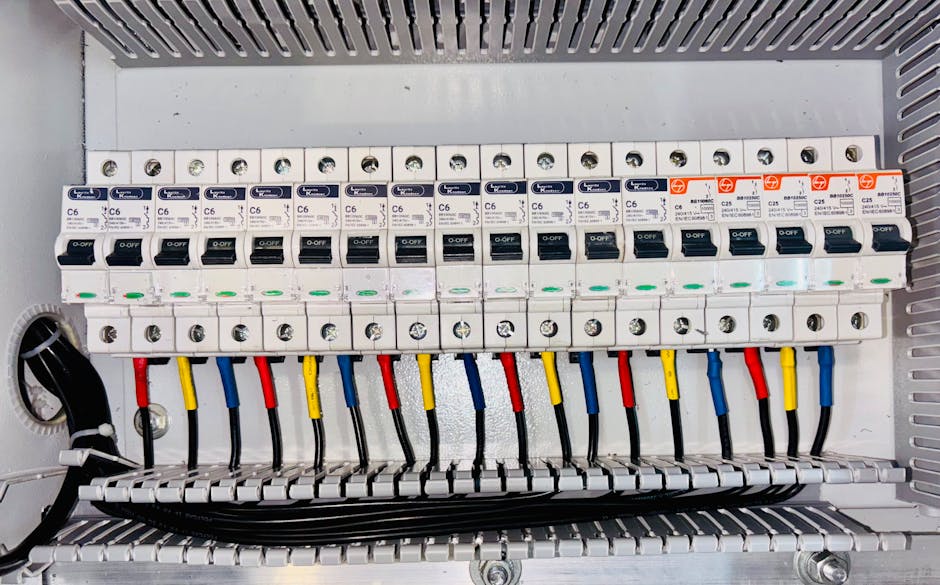
Is your circuit breaker keeps tripping the second you plug in the microwave, run the hairdryer, or flip on the bedroom light? Before you book a $200 to $400 electrician, walk through this 10-minute checklist. The vast majority of nuisance trips are caused by one of three things — an overloaded circuit, a single faulty appliance, or a worn-out breaker — and you can isolate which one safely from your own panel without touching a single wire.
Why your circuit breaker keeps tripping (and why that’s actually good news)
A breaker is a safety device, not a switch — it trips because something on that circuit is drawing more current than the wiring can safely carry. The fact that it trips is exactly what’s supposed to happen. The detective work is figuring out which of three culprits is to blame: overload (too many devices on one circuit), short circuit (a hot wire touching a neutral or another hot), or ground fault (a hot wire touching ground, common in damp areas). The steps below isolate the cause without any tools more dangerous than your phone’s flashlight.
Tools you actually need
- A flashlight or phone torch
- A non-contact voltage tester ($10–$15 at any hardware store)
- A pen and paper, or notes app, to map the circuit
- Dry shoes and dry hands — always
Step 1: Find out which breaker keeps tripping
Open your panel and look for the one breaker that sits in the middle — not fully ON, not fully OFF. That’s the tripped one. If your panel is labeled (rare but a blessing), note which room or appliance it controls. If it’s not labeled, flip on lights and check outlets in adjacent rooms with the tester until you find what went dark. Take a photo of the panel with the offending breaker visible — you’ll want that for reference. If the same circuit breaker keeps tripping in the same spot repeatedly, you’ve already got your suspect circuit.
Step 2: Unplug everything on that circuit
Before you reset anything, go to every outlet on that circuit and unplug every device — lamps, chargers, the toaster, the space heater, that old window AC you forgot about. Flip every wall switch on that circuit to OFF too. The goal is to give the breaker a clean reset with zero load so you can re-introduce devices one at a time.
Step 3: Reset the breaker the right way
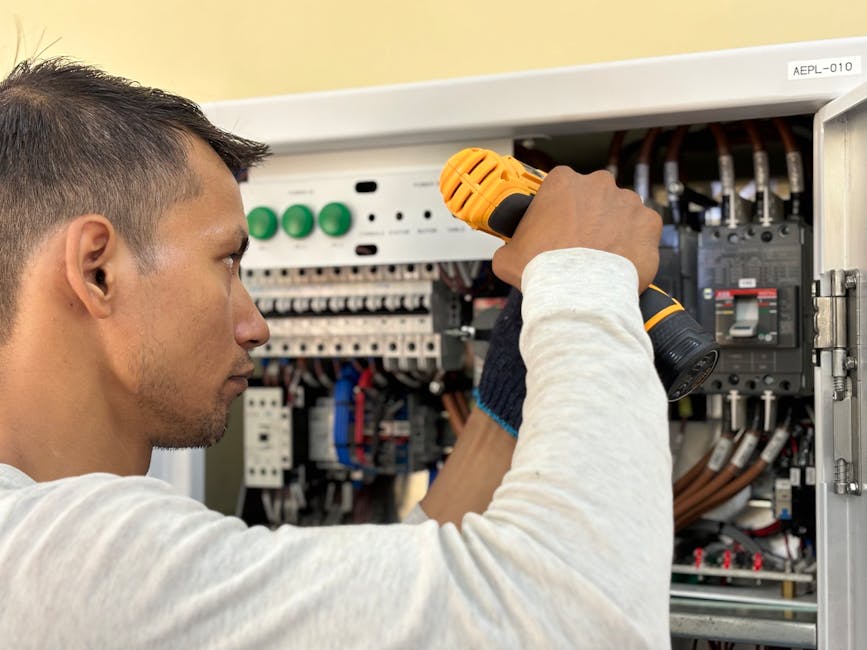
This is the step almost everyone gets wrong. To reset a tripped breaker, you have to push it firmly to OFF first (you’ll feel a definite click), then push it firmly to ON. Just shoving it from the middle position back to ON often doesn’t engage the mechanism. If it holds with zero load on the circuit, your wiring is fine — you have an overload or a bad appliance, both of which Step 4 will identify. If the circuit breaker keeps tripping immediately even with nothing plugged in, stop and skip to “When to call an electrician” below.
Step 4: Re-introduce devices one at a time
Plug devices back in one by one, turn each on, and wait 30 seconds before adding the next. When the breaker trips, you’ve just identified either (a) the appliance that’s faulty or (b) the device that put the total load over the limit. A space heater (1,500W) plus a hairdryer (1,200W) on a single 15-amp circuit is already at the limit; add a vacuum and you’ve found your overload. Spread the load across different circuits and the problem disappears.
If a single device trips the breaker by itself — especially a lamp, a power strip, or anything with a frayed cord — that device is the problem, not the circuit. Inspect the cord for damage, the plug for burn marks, and the appliance for any smell of melted plastic. The Electrical Safety Foundation International (ESFI) extension cord safety guide covers exactly which cord conditions count as immediate retire-and-replace.
Step 5: Check for moisture and GFCI issues
In kitchens, bathrooms, garages, and outdoor outlets, a “circuit breaker keeps tripping” complaint is often really a GFCI doing its job. Look for any outlet on that circuit with TEST and RESET buttons — press RESET. Check for water in any junction box, around outdoor outlets, or in the AC condensate drip pan if the trip happens during cooling season. Moisture is the #1 ground-fault cause, and drying out the offending junction often ends the problem instantly.
Step 6: Suspect the breaker itself
Breakers wear out after enough trips. If you’ve ruled out overload, faulty appliances, and ground fault, and the circuit breaker keeps tripping with the same circuit holding only minor load, the breaker is the suspect. Touch the side of the breaker (NOT the terminals) — a healthy breaker is room temperature; a worn-out one is noticeably warm even at low load. Replacing a single breaker is roughly a $10–$20 part, but the swap involves opening the panel cover and working inches from live bus bars. This is the one step on this list we recommend handing to a licensed pro every time.
When to actually call an electrician
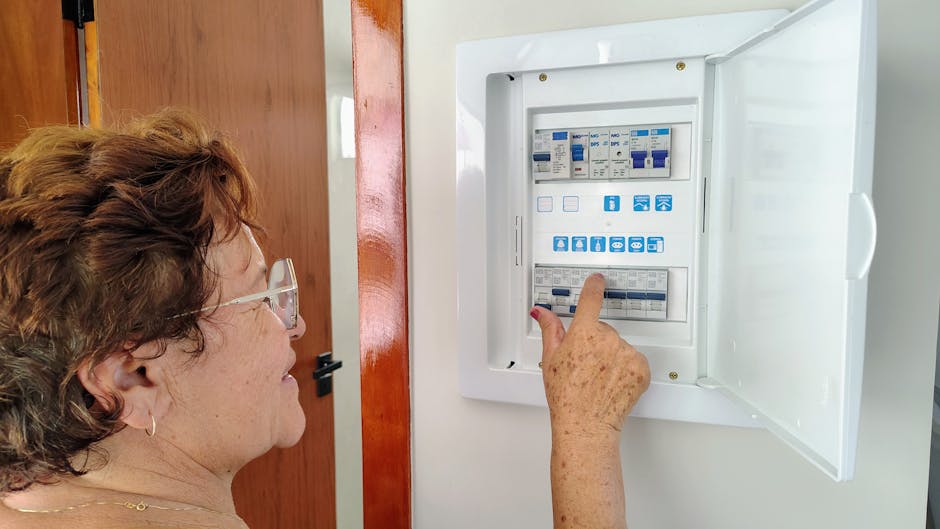
Stop the DIY and call a licensed electrician immediately if any of these apply: the breaker trips the instant you reset it with zero load on the circuit; the panel feels warm, smells like burning plastic, or shows scorch marks; you see or hear arcing; the same breaker has tripped more than three times this week; or the issue is on a 240-volt circuit (dryer, range, central AC, water heater). The NFPA’s home electrical safety guidance backs this up — repeated trips that you can’t isolate are an early-warning sign of a wiring failure that belongs in a pro’s hands.
What to never do
- Never upgrade a breaker to a higher amperage to “stop the tripping.” The wiring is rated for the original amperage; a bigger breaker means the wire will overheat before the breaker trips — that’s how house fires start.
- Never bypass a tripping breaker with a jumper or “trick” it to stay on.
- Never work inside the panel with the cover off unless you’re trained — the bus bars are live even when every breaker is off.
Related quick-fix guides
If a single outlet went dead instead of a whole circuit, our guide on why your outlets stopped working covers the GFCI reset trick that fixes 60% of those cases. While you’re checking electrical loads, it’s also worth knowing how to fix an AC that’s not cooling and what to do when your water heater has no hot water — both share the breaker-and-reset diagnostic pattern.
Final word
If your circuit breaker keeps tripping, the breaker is doing exactly what it’s designed to do — it’s just not telling you why yet. Spend 10 minutes with the unplug-reset-reintroduce sequence above and you’ll almost always find the offending appliance or the overload pattern yourself, for free. Save the electrician for the rare case the breaker, panel, or wiring itself is the failure — that’s the only call where their bill is genuinely the right answer.

Elena Park covers home electrical and HVAC topics for coverhub.fun. Her background in residential electrical service work — outlets, breakers, GFCIs, central air conditioning, and the steady stream of small failures that send most homeowners straight to a service tech — shapes the way her guides are written: figure out what’s actually wrong first, then decide whether you’re looking at a $0 reset or a real repair.
Elena focuses on the service calls that most often turn out to be DIY-safe: a single dead outlet that’s really a tripped GFCI two rooms over, a thermostat that’s reading wrong, a clogged AC condensate line, or a frozen evaporator coil masquerading as a dying compressor. She’s just as clear-eyed about the work that does not belong in a homeowner’s hands — anything inside the main electrical panel, any sustained burning smell, any breaker that won’t stay reset.
Each piece on her byline gets a final safety pass before publishing. Suggestions, corrections, and reader questions are welcome at editorial@coverhub.fun.