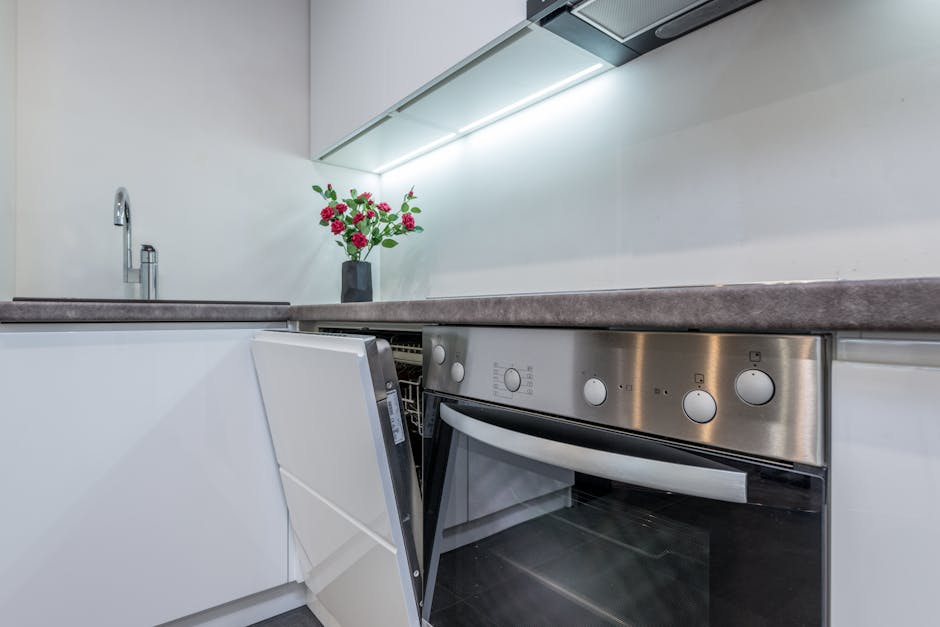
A dishwasher leaking water onto the kitchen floor — a thin line creeping out from under the door, a puddle at the front kickplate, or a damp cabinet wall beside the unit — is the appliance complaint that most often triggers a same-day repair call and a $150 to $250 bill. It rarely needs one. In more than 75% of cases a dishwasher leaking traces to one of five cheap, reachable failure points: a worn door gasket, an overfilled or wrong detergent, a loose or cracked drain hose, a clogged filter forcing water past the seal, or a tilted, unlevel tub. Every one of them you can diagnose and almost always fix in 30 minutes with a flashlight, a towel, and a screwdriver. Before you book a tech, give yourself half an hour and work the five checks below in order.
I have run this exact diagnostic on hundreds of service calls. The pattern is remarkably consistent, and the parts you might need cost between $6 and $25 at any hardware store or appliance-parts counter. Most homeowners stop at step three.
Why a dishwasher leaking is almost never the pump or the motor
A dishwasher is a sealed plastic or stainless tub with a spray arm, a circulation pump, a drain pump, a heating element, and a door that latches against a rubber gasket. Water only escapes that tub at a handful of points, and working appliance techs see the same breakdown in nearly every kitchen they walk into. Roughly 30% of a dishwasher leaking complaint is a worn or food-fouled door gasket; about 20% is the wrong detergent or too much of it, throwing suds out past the door seal; about 20% is a loose, kinked, or split drain hose under the sink; about 15% is a clogged filter or spray arm backing water up over the door lip; and about 10% is a tub that has shifted out of level so water pools toward the door instead of the sump. Only the last 5% is a genuinely failed pump seal or cracked tub that needs a tech. The math is friendly: 95% of a dishwasher leaking is a seal, a hose, or a habit — not a dead machine.
What you will need before you start
- A flashlight and a roll of paper towels
- A Phillips and a flat-head screwdriver
- A pair of channel-lock or adjustable pliers
- An old bath towel and a small bucket
- A short carpenter’s level (or a phone level app)
- White vinegar and a soft cloth for cleaning the gasket
Before you start: turn off the dishwasher at the breaker or unplug it under the adjacent sink cabinet, and shut the small hot-water supply valve under the sink that feeds the unit. Pull the unit’s contents and lay a towel across the floor in front of it so you can see exactly where fresh water appears as you test. If the water is gushing rather than seeping — a steady stream, not a slow line — the supply line itself may be the culprit, which overlaps with our under-sink supply and faucet leak guide.
Step 1: Inspect and clean the door gasket
This is the highest-payoff move for any dishwasher leaking diagnosis. Open the door and run a finger all the way around the flexible rubber gasket that lines the tub opening — the sides and top on most models, plus a separate gasket along the bottom lip on many. You are feeling for hardened, cracked, or flattened sections, and looking for trapped food, grease, or a fold where the gasket has popped out of its channel. Wipe the whole gasket down with a cloth dipped in white vinegar to strip the grease film that stops it sealing, then press any popped sections firmly back into their groove. Close the door and watch the next wash cycle from the floor. About 30% of a dishwasher leaking stops permanently right here. If the gasket is split or rock-hard, a replacement strip is a $12 to $20 part that slides into the channel in 15 minutes — no tools beyond your fingers.
Step 2: Rule out the wrong detergent (the #1 false alarm)
If the gasket looks fine, the next most common cause costs nothing to fix. A dishwasher leaking foamy or soapy water out the door is almost always a detergent problem, not a hardware failure. Regular dish soap, hand soap, or too much powder/gel generates a mountain of suds that the door seal cannot contain, and the overflow looks exactly like a leak. Use only detergent labeled for automatic dishwashers, and only the amount the dispenser holds — never fill the main cup to the brim. If you have already over-soaped, run one empty rinse-only cycle with a tablespoon of vegetable oil in the bottom to knock the foam down. About 20% of a dishwasher leaking complaint is solved at this step with zero parts. If your dishes also come out filmy or gritty, the detergent and water-hardness issue overlaps with our dishwasher not cleaning walk-through.
Step 3: Check the drain hose and connections
Open the cabinet under the adjacent sink and find the corrugated drain hose running from the dishwasher to the sink drain or garbage disposal. With the flashlight, trace its entire length. You are looking for three things: a hose clamp that has loosened where the hose meets the disposal or air gap (snug it a quarter turn with the screwdriver), a kink or crush point where the hose folds behind stored cleaning supplies (re-route it in a smooth loop), and any split or pinhole in the corrugations themselves (replace the hose, a $10 part). Run a short cycle and watch this junction with a dry paper towel wrapped around each connection — the first towel to wet tells you the source. A dishwasher leaking only during the drain phase, never during the wash, points squarely at this hose. If the unit is also failing to empty, the problem crosses over with our dishwasher not draining guide.
Step 4: Clean the filter and check the spray arm
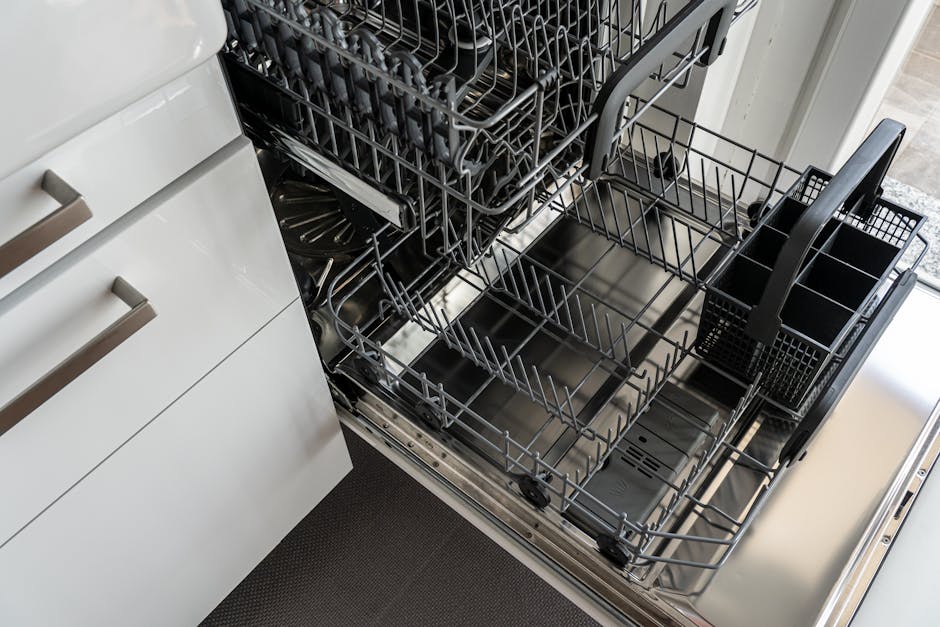
Pull the lower rack and lift out the cylindrical filter assembly at the bottom of the tub (most twist a quarter turn to release). Rinse it under the tap to clear food sludge, grease, and the bits of glass or labels that collect there. A clogged filter forces wash water to back up and spill over the inner door lip instead of draining through the sump — a classic cause of a dishwasher leaking that only appears mid-cycle. While the filter is out, spin the lower spray arm by hand: if it is cracked or its bearing is worn, it can spray water directly at the door seal instead of up at the dishes. A replacement spray arm is a $15 to $25 snap-on part. Reseat the filter firmly — a filter left loose or misaligned is itself a leak path.
Step 5: Confirm the dishwasher is level
If the first four checks come up dry, set your level on the bottom of the tub and on the open door, front to back and side to side. A dishwasher that has been bumped or settled out of level — tilted forward even a quarter inch — lets wash water pool toward the door instead of draining back to the sump, and it weeps out the bottom corner every cycle. The fix is free: most units have adjustable threaded feet at the front and a leveling foot or bracket at the rear. Turn the front feet up or down with the pliers until the tub sits dead level and the door closes square against the gasket. Re-check the door latch engages without you having to lift or shove the door. About 10% of a stubborn dishwasher leaking is solved with a 60-second leveling adjustment.
When to actually call an appliance repair tech
Call a tech, or budget for a repair, only if: the gasket is clean and intact, the detergent is correct, the drain hose and clamps are sound, the filter is clear, and the unit is level — and water is still appearing from the center underside of the tub. That points to a failed circulation-pump seal or a hairline crack in the tub or sump, the two faults that genuinely need a pro and the right replacement part. A pump-seal job runs $150 to $250 installed; a cracked tub usually means the machine is not worth repairing on a unit over eight years old. Before you commit, check the model’s age and warranty — many dishwashers carry a multi-year parts warranty, and the U.S. Consumer Product Safety Commission’s recall database at cpsc.gov is worth a 30-second search, because leaking and overheating dishwashers are among the more frequently recalled appliances. For long-run efficiency, the U.S. EPA and Department of Energy’s ENERGY STAR dishwasher guide lists models that use far less water per cycle — a smaller leak surface and a smaller utility bill.
One last habit: wipe the door gasket clean once a month, run a vinegar rinse cycle every few weeks to keep the filter and sump free of grease, and never use anything but automatic-dishwasher detergent. Those three rules prevent the overwhelming majority of a dishwasher leaking complaint before it ever reaches your floor. The cheapest repair visit is the one you never have to schedule.
Aiden Brooks writes coverhub.fun’s home-appliance coverage, with a focus on the everyday breakdowns that prompt a $200–$300 service call when a no-cost fix would have worked just as well. His background in residential appliance service shows up in the structure of his guides: open with the failure pattern, walk through the cheapest checks first, and only get to parts replacement after every easy win has been ruled out.
Aiden focuses on dishwashers, garbage disposals, washing machines, dryers, and refrigerators — the workhorses that quietly drain household budgets when they go sideways. His recurring theme is that most ‘broken appliance’ verdicts are really a clogged filter, a kinked drain hose, a tripped thermal switch, or a piece of glass jammed in an impeller that sixty seconds with a flashlight can find. When a unit really is at end of life, he’ll tell you that too — and what to look for in a replacement.
Aiden also runs the appliance-safety editorial pass at coverhub.fun: every guide on his byline is reviewed against manufacturer safety guidance before going live. Reach him at editorial@coverhub.fun.