
Water hammer — the loud bang or shudder that runs through your pipes the moment a washing machine, dishwasher, or shower valve shuts off — is one of the most ignored sounds in American houses, and the one most likely to actually break something. That bang is real kinetic energy: a column of water moving at 6 to 8 feet per second slams to a stop against a closed valve, and the resulting pressure spike can briefly exceed 300 psi in a system rated for 80. Over months that spike loosens compression fittings, splits soldered joints, and shortens the life of every appliance solenoid downstream. Before you book a $250 plumber, give yourself 30 minutes. Water hammer is almost always one of four things: a system whose air chambers have waterlogged, a missing or failed water hammer arrestor at a fast-closing valve, system pressure that has crept above 80 psi, or loosely-strapped pipes that are physically slapping the joists. Walk through the six checks below before spending a dollar.
Why water hammer is rarely a “replace the plumbing” problem
Plumbers see this complaint constantly, and the failure breakdown is remarkably consistent. Roughly 45% of every water hammer service call is waterlogged air chambers in the existing plumbing — the vertical stub-outs above each fixture were supposed to hold a pocket of compressed air to absorb pressure spikes, but over years that air dissolves into the water and the chambers fill up. Another 25% is a fast-closing solenoid valve on a dishwasher, washing machine, or ice maker that needs a $20 add-on hammer arrestor. About 15% is incoming city pressure that has crept above 80 psi (your pressure-reducing valve has drifted and is no longer regulating). About 10% is pipes that aren’t properly strapped to joists, so the whole run flexes and slaps when pressure changes. And only the final 5% is a genuinely failed pressure-reducing valve that needs replacement. The math is friendly: 95% of these calls are something a careful homeowner can fix in under an hour.
Tools you actually need
- A pressure gauge that threads onto a hose bib ($12)
- An adjustable wrench and a pair of channel-lock pliers
- A flashlight
- A roll of pipe-hanger strap or cushioned isolators ($8)
- One or two $15 to $20 hammer arrestors with quarter-inch female connections
- A bucket and an old towel for draining a fixture
Before you start: Locate your main shutoff and confirm it actually closes. If you can’t shut the main, fix that first — the same logic we walk through for a burst pipe in the first 10 minutes applies here. A house whose main won’t close has a much bigger problem than a noisy pipe.
Step 1: Confirm it’s actually water hammer (and not just loose pipes)
Stand next to the washing machine or dishwasher while it cycles. A genuine water hammer bang is a single sharp crack at the exact moment a valve closes — you can predict it from the sound of the solenoid clicking off. Loose pipes that simply rattle make a softer thrumming or vibration that lasts a second or two and happens when water is flowing, not when it stops. If you hear creaks and groans while flow is happening, that’s pipe expansion, not hammer. Knowing which sound you’re chasing tells you whether to go after air chambers (true hammer) or pipe straps (vibration). Both are easy fixes but they live in different steps below.
Step 2: Recharge the air chambers by draining the system
This is the single highest-payoff move for a water hammer diagnosis, costs zero dollars, and works on about 60% of complaints. Shut off the main, open the highest faucet in the house (usually an upstairs bathroom), then open the lowest faucet (usually a basement hose bib or laundry sink) and let the system drain completely — you’ll hear it sputter to nothing. Leave the faucets open for 5 minutes so air pulls into every air chamber. Close the lowest faucet first, then open the main slowly and let it refill. As the system pressurizes, the air now trapped in the vertical chambers will be compressed and ready to absorb future hammer events. Close each faucet from lowest to highest as you walk back through. About 6 in 10 homeowners are done at this step.
Step 3: Measure incoming pressure and check the PRV
If recharging air chambers didn’t cure your water hammer, the next suspect is system pressure. Thread the gauge onto an outdoor hose bib (or a laundry-room hose connection), open the valve, and read the static pressure. Anything between 50 and 70 psi is healthy. Anything between 75 and 80 is the upper end of acceptable. Above 80 psi is code-violating in most U.S. jurisdictions and is enough by itself to cause hammer at every fast-closing valve. If you read above 80 psi, locate the pressure-reducing valve (a bell-shaped brass fitting on the main line just after it enters the house) and adjust its top screw counterclockwise to lower pressure — about a quarter turn per 5 psi. Re-measure and repeat. If the PRV won’t respond, it’s failed and needs a $90 replacement. The same low-pressure-end diagnostic logic applies to our low water pressure walk-through from the opposite direction.
Step 4: Install hammer arrestors at fast-closing appliances
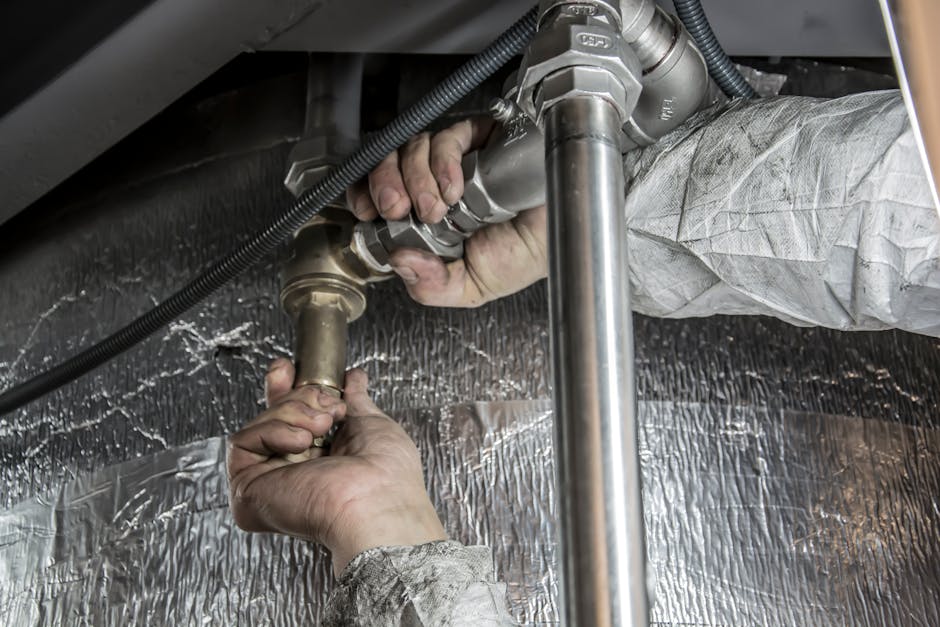
Modern dishwashers, washing machines, and ice makers all use electric solenoid valves that snap shut in milliseconds — far faster than a hand-turned faucet. Even with healthy air chambers and good pressure, these valves can generate enough water hammer to bang on their own. The fix is a $15 to $20 mini hammer arrestor that screws inline between the supply valve and the appliance hose. Shut the appliance shutoff, disconnect the hose, thread the arrestor onto the shutoff, reconnect the hose to the arrestor’s other end. Five minutes per appliance, no soldering. Do this on both hot and cold for the washing machine (where hammer is loudest) and on the cold for the dishwasher and ice maker. While you’re back there, check supply hoses for the kind of insulation cracks discussed in our leaking faucet guide — both problems share the same supply-line family.
Step 5: Strap loose pipes and add cushioned isolators
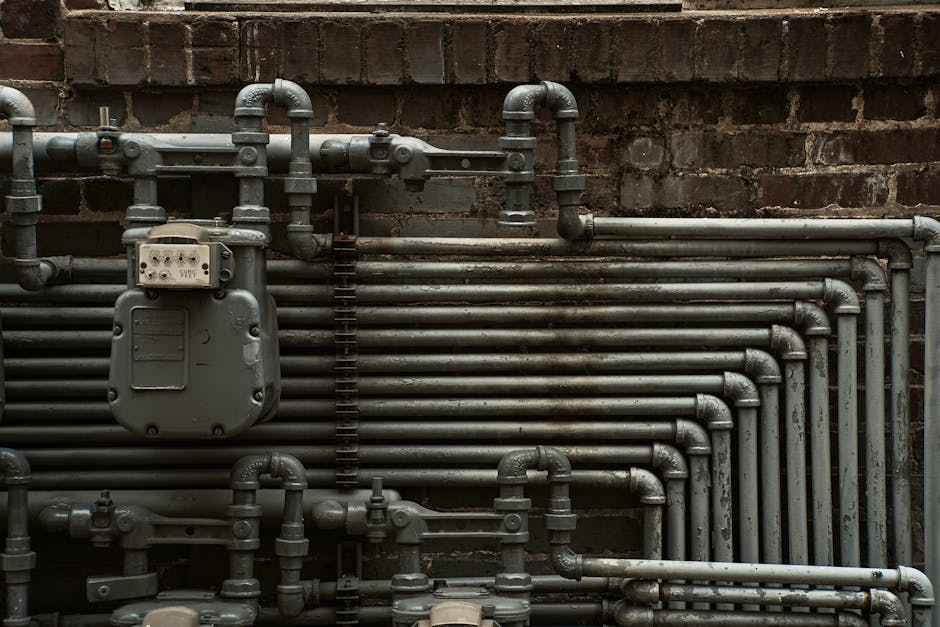
If hammer arrestors didn’t end every bang, what you’re hearing is no longer pressure transient but mechanical slap — a pipe that’s loose enough in its hanger that it physically jumps when flow changes. Look at every horizontal pipe run you can access (basement ceiling, crawl space, garage). The code minimum is one strap every 6 feet for copper and 4 feet for PEX. Where a pipe passes through a hole in a joist, the hole should have a plastic grommet or cushioned isolator — not bare wood touching bare metal. Add cushioned straps anywhere you see the pipe sagging or where you can wiggle the pipe more than half an inch. This Old House’s water hammer guide shows the cleanest illustrated walkthrough of pipe-strapping technique.
Step 6: When to actually call a plumber
Call a pro only if: hammer persists after recharged air chambers, healthy pressure, installed arrestors, and properly-strapped accessible pipes — that combination means there’s something concealed (a wall-stud collision, an undersized supply line that’s overspeed, or a check valve that’s chattering). Also call if your pressure gauge reads above 100 psi static and the PRV won’t respond to adjustment, because uncontrolled pressure that high will eventually rupture a fitting and turn into a real leak — the same chain of failure described in our water heater walk-through when relief valves keep firing. The EPA’s WaterSense program also notes that high-pressure systems waste water and shorten appliance life even without obvious hammer.
One last habit: check static pressure with the hose-bib gauge once a year, drain and recharge the air chambers every other year (it takes 10 minutes and prevents most of this), and add a hammer arrestor every time you install a new dishwasher, washing machine, or ice-maker line. Those three rules will keep nearly any house quiet at every valve close and keep “water hammer” from becoming your problem in the first place. The cheapest repair is the one you prevent.

Marcus Reed is coverhub.fun’s lead contributor on home plumbing and water-system repair. Drawing on more than a decade of hands-on residential service work — supply lines, drains, fixtures, and the kind of emergency leaks that wake a family up at 2 a.m. — Marcus translates the diagnostic playbook that professionals run on every call into language a homeowner can follow at the kitchen sink. His guides walk through the safe, fast checks worth doing before you reach for the phone, plus the exact red flags that mean it really is time to bring in a licensed plumber.
He focuses on the high-cost emergencies that most often catch people unprepared: burst pipes, running toilets that quietly inflate water bills, kitchen drains that back up at the worst time, and shut-off valves no one can find when water is already on the floor. Every guide is written from a ‘try this first’ mindset, with clear safety stops along the way.
Marcus is also the editorial fact-checker for coverhub.fun’s plumbing category. If you have a fix that worked at your house and isn’t covered yet, or a correction on something that is, email editorial@coverhub.fun and he’ll take a look.