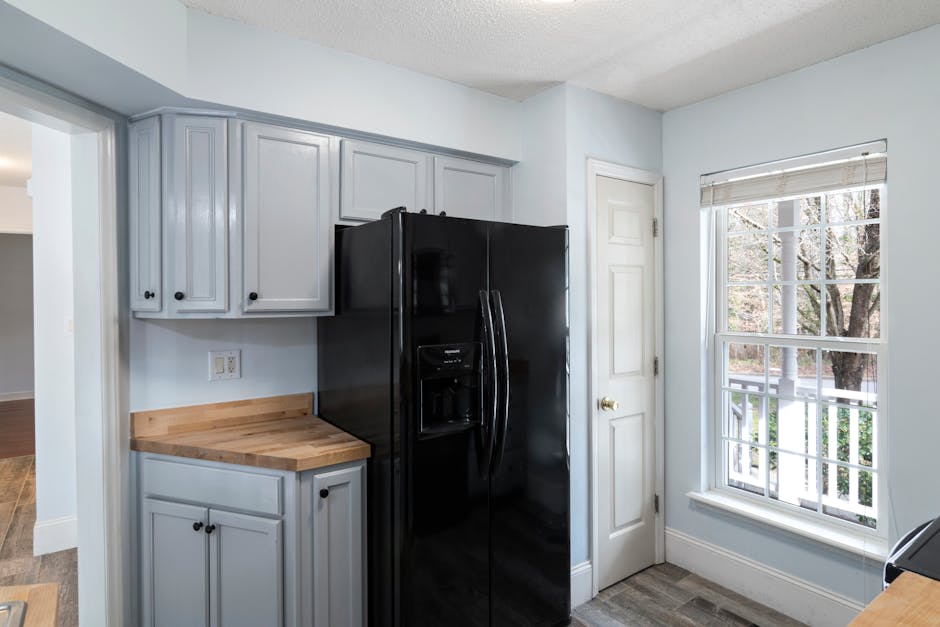
A freezer not freezing is the appliance failure that hits your wallet the hardest, because the moment it happens the clock starts ticking on hundreds of dollars of food. The frustrating part is that everything else usually looks fine — the freezer light is on, the fridge below is cold, the compressor is humming — but the ice cream is soup and the chicken is pink and limp. Before you book a $150 appliance service call, give yourself 30 minutes. A freezer not freezing is almost always one of five things: condenser coils choked with dust, a stuck or frosted-over evaporator fan, an iced-up defrost system, a door gasket no longer sealing, or a freezer that’s been stuffed so full that cold air can’t circulate. Walk through the six checks below before spending a dollar — or losing the contents.
Why a freezer not freezing is rarely a “buy a new one” problem
Appliance techs see this complaint constantly, and the failure breakdown is remarkably consistent. Roughly 35% of every “freezer not freezing” service call is condenser coils so dusted with pet hair and kitchen lint that the refrigeration cycle can’t reject heat — the compressor runs constantly but can’t pull the box down to 0°F. Another 25% is an evaporator fan whose blade has frosted over or whose motor has seized, so cold air is being made but never moved into the food compartment. About 20% is a defrost heater, defrost thermostat, or defrost timer failure that lets ice build up on the evaporator coil until airflow stops completely. About 10% is a torn or compressed door gasket leaking warm room air past the seal. About 7% is overpacking — cold air physically cannot circulate around shoulder-to-shoulder frozen pizzas. And only the final 3% is a true sealed-system failure (leaking refrigerant or dead compressor) that justifies replacement. The math is friendly: 97% of these calls are something a careful homeowner can resolve themselves.
Tools you actually need
- A vacuum with a brush attachment and a coil-cleaning brush ($8)
- A Phillips screwdriver and a quarter-inch nut driver
- A hair dryer or heat gun on low setting
- A digital thermometer ($10) for inside the box
- A dollar bill (for the door gasket leak test)
- A flashlight
Before you start: If your freezer not freezing problem is recent and food is still partly frozen, move everything to coolers with ice packs — you have about 4 hours of partial-freeze grace and you’ll need most of that to diagnose. The general appliance-safety logic from our refrigerator not cooling walk-through applies here word-for-word.
Step 1: Confirm the temperature and rule out simple causes
Drop a digital thermometer between two frozen packages, close the door, and wait 30 minutes. A healthy freezer reads 0°F (-18°C); anything between 10°F and 32°F means the unit is running but undercooled — the most common pattern. Anything warmer than 32°F means the cooling system isn’t running at all (jump to Step 5 first). While you wait, look at the simple stuff: someone may have turned the dial down for energy savings, the “Sabbath mode” or “demo mode” may have been bumped on, or the door may have been left ajar for hours overnight. About 1 in 8 freezer not freezing calls end at this step.
Step 2: Vacuum the condenser coils
This is the single highest-payoff move for a freezer not freezing diagnosis and the most-skipped maintenance task in any kitchen. Pull the fridge out from the wall, find the condenser coils (a black grid either on the back of the unit or behind a kick-plate at the bottom front), and vacuum them thoroughly. On bottom-mount coils, use the brush attachment and a coil brush to reach the dense middle rows. The dust insulates the coils and the compressor cannot reject heat to the kitchen air through a quarter-inch felt of pet hair. Coils should be cleaned every 6 to 12 months — in homes with shedding pets, every 3. About 4 in 10 homeowners are done after this step alone, with food re-freezing within 6 hours.
Step 3: Check the evaporator fan and listen for it
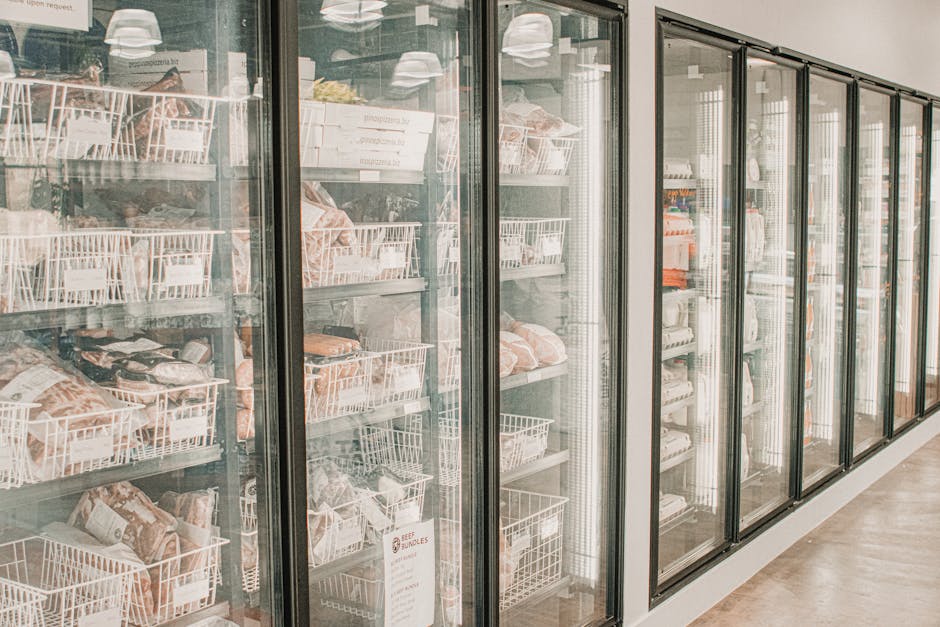
Open the freezer door and press the door switch with your finger (so the unit thinks the door is closed). Within a few seconds you should hear a small fan running behind the back wall of the freezer compartment — that’s the evaporator fan, the part that moves cold air over the food. If you hear nothing, the fan is dead or its blade is frozen against an ice buildup. Unplug the fridge, remove the back panel of the freezer (4 to 6 screws), and inspect. If you see frost or ice on the coil and fan blade, the defrost system has failed (Step 4). If everything is clear but the fan blade won’t spin freely by hand, the motor is dead — a $25 part and a 15-minute swap.
Step 4: Force a manual defrost
If the evaporator coil is iced over, the freezer’s automatic defrost system has stopped working. The fastest diagnostic is also the fastest temporary fix: unplug the fridge, empty the freezer, and leave the door open for 8 to 12 hours so all the ice melts. Lay towels at the base — you’ll get a couple of quarts of melt water. Plug back in, restock, and watch over the next 48 hours. If the freezer holds 0°F and the coil stays clear, you’ve bought yourself months — but the defrost system will fail again. To actually repair: test the defrost heater (200 to 600 ohms healthy), defrost thermostat (closed at freezer temp, open at room temp), and the defrost control board. Whichever is open or out of spec is your culprit — each is a $15 to $40 part. The same iced-up-evaporator pattern shows up in our ice maker walk-through, where a frozen fill tube is the localized version of this same failure.
Step 5: Door gasket leak test and overpack check
Close the freezer door on a dollar bill so half sticks out, then pull. A healthy gasket grips the bill so you feel firm drag; if the bill slides out with no resistance, that section of the gasket is compressed or torn and letting warm room air leak in 24/7. Walk the entire perimeter of the door with the dollar-bill test. A new OEM gasket is $40 to $90 and a 20-minute swap (loosen the inside retainer screws, peel off, press the new one in, snug the screws). While the door is open, also assess load: if frozen items are packed shoulder-to-shoulder against the back wall or covering the vent louvers, cold air cannot circulate — redistribute so each shelf has at least 2 inches of gap around the vent openings. Energy Star’s refrigerator guide covers the airflow and gasket logic in detail.

Step 6: When to actually replace the unit
Replace the entire refrigerator only if: the compressor cycles for 30 seconds and then clicks off on its thermal overload (sealed-system failure or compressor-windings short), you see oily residue around any refrigerant joint (leak in the sealed system), the unit is more than 12 to 15 years old and the repair quote exceeds half the replacement cost, or the cabinet has cracked plastic liners or rusted-through metal in the food zone. A respectable bottom-freezer refrigerator is $700 to $1,200; a stand-alone chest or upright freezer is $300 to $600. Before you replace, also rule out external causes — a freezer plugged into an outlet on a circuit that keeps dropping power has the same symptoms as a failing unit. The diagnostic logic in our circuit breaker walk-through is worth a quick scan, and the FDA’s refrigerator and freezer storage chart tells you which foods to discard once temperatures have drifted.
One last habit: vacuum the condenser coils every six months, leave at least 2 inches of clearance behind the fridge for airflow, and never block the rear vents inside the freezer with tall boxes. Those three rules will keep nearly any freezer hitting 0°F for the next decade and keep “freezer not freezing” from becoming your problem in the first place. The cheapest repair is the one you prevent.
Aiden Brooks writes coverhub.fun’s home-appliance coverage, with a focus on the everyday breakdowns that prompt a $200–$300 service call when a no-cost fix would have worked just as well. His background in residential appliance service shows up in the structure of his guides: open with the failure pattern, walk through the cheapest checks first, and only get to parts replacement after every easy win has been ruled out.
Aiden focuses on dishwashers, garbage disposals, washing machines, dryers, and refrigerators — the workhorses that quietly drain household budgets when they go sideways. His recurring theme is that most ‘broken appliance’ verdicts are really a clogged filter, a kinked drain hose, a tripped thermal switch, or a piece of glass jammed in an impeller that sixty seconds with a flashlight can find. When a unit really is at end of life, he’ll tell you that too — and what to look for in a replacement.
Aiden also runs the appliance-safety editorial pass at coverhub.fun: every guide on his byline is reviewed against manufacturer safety guidance before going live. Reach him at editorial@coverhub.fun.