Last July my central air died on the hottest day of the year. The thermostat was set to 72. The house was sitting at 84 and climbing. The unit was running, you could hear the indoor blower running and the outdoor compressor running, but the AC was not cooling anything. Just blowing room-temperature air through the vents while we slowly cooked.
I called the local HVAC company. Earliest appointment was four days out, which felt like a death sentence in 95 degree heat. The dispatch lady said the after-hours emergency call would be $189 just to show up, plus parts and labor on top of that. I said I would try a few things first.
Three hours later the house was at 71. Total cost: zero dollars. The fix was a clogged filter I had not changed in fourteen months. Twenty seconds of work once I figured out what was wrong.
This guide is for anyone whose AC is not cooling and is panic-googling at 4 PM on a hot day. I am going to walk you through six checks in order, from the easiest free fixes to the more involved DIY repairs. Most readers will solve the AC not cooling problem in the first thirty minutes without spending a dime. The few who do not at least save themselves the diagnostic fee by telling the HVAC tech exactly what they tried.
For background on residential air conditioning efficiency and maintenance, the ENERGY STAR central air conditioning guide from the U.S. government is worth bookmarking for after this article.
High-CPC Keywords: AC repair cost, HVAC service near me, central air not cooling, AC compressor replacement, freon refill cost, capacitor replacement cost.
Part 1: First Check (AC Not Cooling, or Just Not Running?)
Before you assume the AC is broken, spend ninety seconds confirming the system is even powered up and trying. A surprising number of AC not cooling calls are really AC not running calls, which is a different problem with a much simpler fix.
The Thermostat Check
Walk to your thermostat. Look at the screen. Is it on? If the screen is dark, your thermostat needs new batteries. This sounds insulting to mention but it is the single most common problem on hot days because old thermostats run on AAs that die quietly.
Is the thermostat set to COOL, not HEAT, not OFF, and not FAN-only? FAN only blows air without cooling, which feels like AC not cooling because warm air comes through the vents. Set it to COOL and set the temperature five degrees below the current room temp. Wait two minutes.
The Breaker Check
Walk to your electrical panel. Look for the breakers labeled AC, AIR CONDITIONER, AIR HANDLER, or HVAC. Most homes have two: one for the indoor air handler and one for the outdoor compressor. Are they both in the ON position?
A tripped breaker for AC sits in a middle position, neither all the way on nor off. Push the breaker firmly to OFF first, then push it firmly to ON. That is the only way the internal mechanism resets. Walk back to the thermostat. Wait five minutes. If the breaker trips again immediately, leave it off and call a pro. Repeated trips mean a real electrical fault.
The Outdoor Unit Test
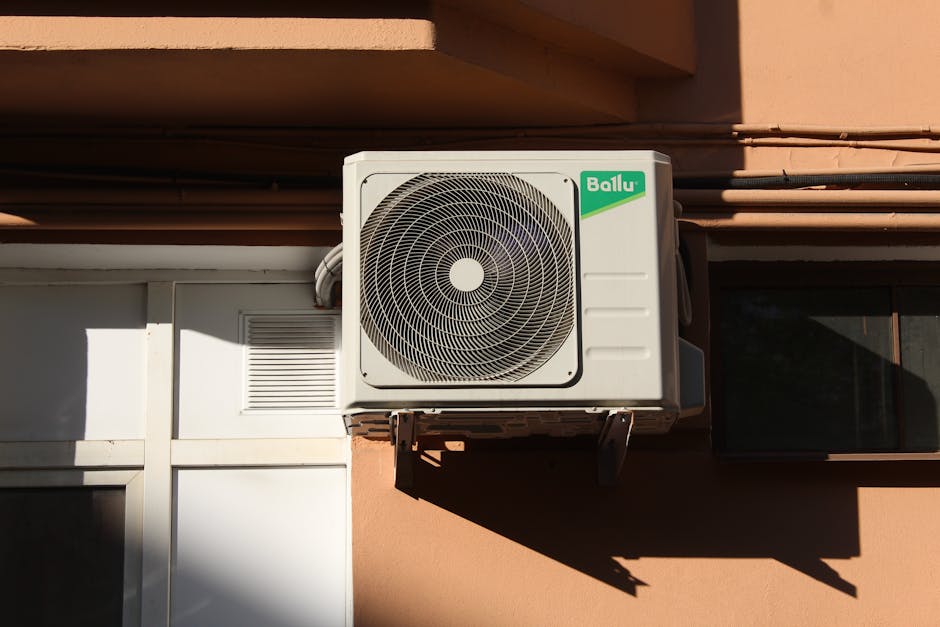
Walk outside to the condenser unit (the big metal box with the fan on top that sits next to your house). Is the fan spinning? If yes, and you hear the compressor humming, the system has power and is trying to cool. The AC is not cooling because something else is wrong, and you keep moving down this guide. If the fan is not spinning at all, you have a power problem, a capacitor problem, or a contactor problem. We will get to those in Part 6.
Part 2: The Filter Fix (The #1 AC Not Cooling Cause)
I will repeat this because it is the answer for about half of all AC not cooling complaints in American homes. A clogged air filter is the number one cause. Not refrigerant. Not the compressor. Not a freon leak. A filter.
Why a Dirty Filter Kills Cooling
Your AC system pulls warm air from your house, passes it across a cold metal coil inside the indoor unit, and pushes the cooled air back into the rooms. When the filter is clogged with dust, almost no air can pass through. With no airflow, the cold coil cannot pull heat out of the air. The coil gets so cold it freezes solid with ice, and now you have an AC not cooling at all, because the airflow is choked off and the coil is iced over.
This is why every HVAC manual on earth says change your filter every one to three months. People do not do this. I did not do this. Then I sat in an 84 degree house wondering why the AC was not cooling.
Where to Find Your Filter
The filter lives in one of three places depending on your system. The most common spot is a slot in the return air vent, usually a big rectangular grille on a wall or ceiling somewhere in your house. Pop the grille open with a screwdriver or a couple of clips. The filter slides out.
The second spot is right at the indoor air handler unit itself, which lives in a closet, attic, garage, or basement. There is a slot on one side where the filter slides in. Look for a 1-inch or 4-inch slot.
The third spot is at every individual room vent, in newer high-end systems. If your home has tiny filters at every vent, you will need to change all of them.
How to Spot a Bad Filter
Pull the filter out. Hold it up to a light source. If you can see light through it clearly, it is fine. If you cannot see light through the filter at all, that is your AC not cooling problem in your hands. Replace it. New filters cost $5 to $25 depending on size and MERV rating. MERV 8 is fine for most houses and good for the unit. MERV 11 or 13 catches more allergens but restricts more airflow. Higher is not always better.
After you put a fresh filter in, give the system thirty minutes to recover. If the coil was iced over from running with a clogged filter, it has to thaw before cool air comes out. During that thaw period the AC will still feel like it is not cooling. Be patient. Set the thermostat fan to AUTO (not ON), wait, and check again.
Part 3: The Outdoor Condenser Coil (Dirt Is the Silent Killer)
If you changed the filter and the AC is still not cooling, the next suspect is the outdoor unit. The outdoor unit dumps heat from your house into the outside air. To do that job, it needs to breathe. When the metal fins on the side are clogged with grass, leaves, cottonwood fluff, or general yard dust, the unit cannot release heat and your AC is not cooling indoors.
Looking at the Outdoor Unit
Go outside. Walk around the condenser. Look at the metal fins on the sides. Do you see grass clippings stuck in them? Dust? Pet hair? Spider webs? Cottonwood fluff matted between the fins? Any of those means your AC is suffocating.
Also check the area around the unit. Building code wants at least two feet of clear space on all sides and five feet above for proper airflow. If a hedge has grown into your condenser, or you stacked something near it, that alone can drop cooling capacity by 20 percent.
How to Clean the Condenser Safely
Turn off the power to the outdoor unit at the disconnect box mounted on the wall right next to it. This is a small gray box you pull a switch or pull a fuse from. With the power off, take a garden hose with a regular spray nozzle and gently rinse the fins from the inside out if you can, or from the outside in if you cannot. Use moderate pressure. Do not use a pressure washer. The fins are made of thin aluminum and a pressure washer flattens them, which makes the airflow problem worse, not better.
Spray top to bottom around the entire unit. Take your time. The water should come out the other side carrying dust, grass, and fluff with it. Let the unit dry for fifteen minutes. Turn the power back on. Run the AC for thirty minutes and check the air at the vents.
For matted-down fins (the aluminum fins are bent flat instead of straight), you can buy a fin comb at any hardware store for $8 and gently straighten them. This is a small detail but it can buy back another 10 percent of capacity on an older unit.
Part 4: The Frozen Coil Problem (AC Not Cooling Despite Running)
This is the one that makes people lose their minds. The AC is running. The thermostat is set to 70. The air coming from the vents is barely cool, sometimes even warm. And inside the indoor unit there is a giant block of ice. The AC is not cooling because there is a frozen evaporator coil, and most homeowners do not even know to check for this.
How a Frozen Coil Causes AC Not Cooling
The indoor evaporator coil should run cold, around 40 degrees Fahrenheit, but not freezing. Three things cause it to drop below freezing and ice over: low airflow (clogged filter, dirty blower wheel, blocked return vents), low refrigerant charge (a slow leak), or running the AC in air temperatures below 60 degrees outside. Once the coil ices over, the ice insulates the metal from the air passing across it, and the AC just stops cooling.
How to Confirm a Frozen Coil
Open the access panel on the indoor air handler. (It is usually held on by two thumb screws or a couple of metal clips.) Look at the metal coil inside. Do you see a layer of frost or ice on it? If yes, that is a frozen coil and that is your AC not cooling problem.
Also look at the refrigerant line, the larger copper line that runs from the indoor unit to the outdoor unit. If it is iced over, sweating heavily, or has frost on the outside of it, the coil is iced too.
The Thaw and Diagnose
Turn the thermostat to OFF. Turn the fan to ON. Walk away for two to three hours. The blower will move room air across the frozen coil and melt the ice. Put a few towels under the unit because melt water is going to drip.
Once the coil is fully thawed, change the filter (if you have not already), open every interior door and vent in the house, then turn the AC back on and see if it cools properly. If it cools fine for several hours, you fixed it — the freeze was caused by airflow restriction. If it ices over again within a few hours of running normally, you probably have a refrigerant leak and that is HVAC tech territory, because adding refrigerant is illegal for unlicensed people to do under the EPA Clean Air Act.
Part 5: The Thermostat & Hidden Settings (Free Fixes People Miss)
A few free settings can make it feel like the AC is not cooling when nothing is actually wrong with the equipment. Always check these before you pull out the wallet.
Fan Setting: AUTO Not ON
The thermostat has two fan settings, AUTO and ON. AUTO means the blower runs only when cooling. ON means the blower runs continuously, even when the compressor is off. When the blower runs without the compressor, it pushes uncooled air through the vents, which feels exactly like AC not cooling because warm air is coming out. Set fan to AUTO and the room-temp air problem goes away.
Thermostat Batteries
Old thermostats run on batteries. When the battery gets low, the thermostat can fail in weird ways: showing the correct temperature but not actually calling for cool, or calling for cool but not sending the right signal to the outdoor unit. Pop the cover off and replace the AAs. $4 fix. People miss this all the time because the screen is still showing something.
Thermostat Location
If your thermostat is mounted on a wall that gets afternoon sun, or near a kitchen, or near a return vent, it can read the wrong temperature. The room never feels cool because the thermostat thinks the job is done. There is no easy fix for thermostat location short of moving it, but knowing this is happening helps you set the thermostat lower than you think you need.
Smart Thermostats
If you installed a Nest, Ecobee, or other smart thermostat, check the schedule and the eco modes. Some smart thermostats will hold the house at 78 in eco mode even though you set it to 72, because they are trying to save energy. Disable eco temporarily and see if the AC starts cooling properly.
Part 6: When to Call an HVAC Pro (And What It Should Cost)
If you got through Parts 1 through 5 and your AC not cooling problem is still unsolved, it is time to call. Here is what you are likely looking at, and what it should cost.
Symptoms That Mean a Pro Visit
If the outdoor unit hums but the fan never starts, you probably have a bad capacitor. Capacitors are $20 parts that store electrical charge to kick the motor. They fail constantly, especially in hot climates, and a tech can replace one in fifteen minutes for $150 to $400 total. Some confident DIY people replace these themselves with the power off, but a capacitor can hold a dangerous charge even when unplugged, so do not touch one without training.
If you hear a click and then nothing every time the thermostat calls for cool, the contactor in the outdoor unit may be bad. Same idea as a capacitor: cheap part ($25), professional install ($150 to $300). A failed contactor is one of the most common causes of AC not cooling at all on the hottest day of the year.
If the system runs and runs but air comes out only slightly cool, and the coil is not frozen and the filter is clean, you may have a refrigerant leak. The legal repair requires an EPA Section 608 license, so this is plumber-level off-limits for DIY. Refrigerant leak diagnostics and repair run $400 to $1,200 depending on how much refrigerant has leaked and where the leak is.
If the outdoor compressor itself has failed, you are looking at a major repair: $1,200 to $2,800. At that price the question becomes whether to repair or replace the whole system, especially if the unit is older than 12 years.
Typical HVAC Tech Costs
In most of the country, expect $85 to $150 an hour for HVAC labor, with a one-hour minimum on a service call. After-hours and weekend rates are typically 1.5x to 2x the daytime rate. Most reputable companies charge a flat diagnostic fee of $75 to $150 that gets applied to repair costs if you proceed.
Get at least two written quotes for anything over $500. Ask for the model and serial number of the part being replaced, in writing, and the warranty period. Honest HVAC techs are happy to provide both.
For more guidance on choosing an honest contractor, our dead outlet electrician guide covers the same vetting principles that apply across home repair trades. If you are dealing with multiple home issues at once, the burst pipe checklist and running toilet fix are useful companions.
The pattern with AC not cooling problems is the same pattern we keep coming back to on this site. The expensive scary problem is rarely the actual problem. It is almost always a filter, a breaker, a dirty unit, or a setting. Walk through Parts 1 through 5 in order on the next hot day when the AC is not cooling, and you will save yourself the $189 diagnostic fee at minimum. Save the technician for the day they actually have something to fix. For additional homeowner background, the ASHRAE consumer resources page covers HVAC basics in plain language and is a solid follow-up read.

Elena Park covers home electrical and HVAC topics for coverhub.fun. Her background in residential electrical service work — outlets, breakers, GFCIs, central air conditioning, and the steady stream of small failures that send most homeowners straight to a service tech — shapes the way her guides are written: figure out what’s actually wrong first, then decide whether you’re looking at a $0 reset or a real repair.
Elena focuses on the service calls that most often turn out to be DIY-safe: a single dead outlet that’s really a tripped GFCI two rooms over, a thermostat that’s reading wrong, a clogged AC condensate line, or a frozen evaporator coil masquerading as a dying compressor. She’s just as clear-eyed about the work that does not belong in a homeowner’s hands — anything inside the main electrical panel, any sustained burning smell, any breaker that won’t stay reset.
Each piece on her byline gets a final safety pass before publishing. Suggestions, corrections, and reader questions are welcome at editorial@coverhub.fun.