This article is educational and does not constitute professional plumbing, structural, or financial advice. A sewer line is the single pipe every drain in your house depends on, and a failed one can back sewage into the home or undermine a yard for years. Local codes vary; hire a licensed plumber or sewer contractor for the actual work.
Sewer line replacement cost is one of those numbers homeowners never research until a drain backs up for the third time in a month, the yard develops a suspiciously green and soggy stripe, or a camera inspection shows roots wrapped through a collapsed clay pipe. A full sewer line replacement typically runs roughly $3,000 to $25,000 in 2026, or about $50 to $250 per linear foot installed, and complicated jobs, long deep runs, or lines buried under driveways and mature trees can push past that. Costs vary enormously by region, soil, and site, so treat every figure here as a broad planning estimate rather than a quote. The spread is this wide because the price is really several bills stacked behind one buried pipe: the pipe material itself, the digging or trenchless equipment needed to reach it, the depth and length of the run, and the concrete, landscaping, and lawn that have to be put back when the crew is done. This guide breaks each of those apart so you can read a sewer quote the way an experienced contractor does, and tell an honest bid from a lowball one.

Sewer line replacement cost at a glance: typical 2026 ranges
Contractors price sewer work by the linear foot, and the run from your foundation to the city main or septic tank is usually 30 to 100 feet. Most open-trench replacements land between $50 and $250 per foot installed, so a straightforward 50-foot run might cost $3,000 to $12,000, while a deep 100-foot line under concrete can climb to $20,000 or more. Trenchless methods, pipe bursting or cured-in-place lining, often run $60 to $250 per foot as well, but they can come out ahead on total cost because they skip most of the excavation and nearly all of the surface repair. Spot repairs of a single failed section commonly run $1,000 to $5,000, which is why the repair-or-replace question matters so much.
Treat any single national average with suspicion. The same pipe costs one price in a shallow, open front yard with sandy soil and far more under a 90-year-old oak, a stamped-concrete driveway, or six feet of rocky fill. The material is nearly identical from job to job; the digging is not. Depth, length, access, and what sits on top of the line move the total more than the pipe on the invoice ever does, and prices swing by thousands between neighboring markets.
The components hiding inside every sewer replacement quote
1. Length and depth of the run
Length sets the baseline, since every foot of pipe carries its share of digging, bedding, and backfill. Depth multiplies it. A line three feet down is a quick machine dig; a line eight or ten feet down requires shoring, more spoil handling, and slower, more careful work around other utilities. Homes set far back from the street, or downhill from the main, can carry runs of 100 feet or more, and some of those need specialized solutions just to maintain slope.
2. Pipe material
Most modern replacements use PVC or ABS plastic, which is inexpensive, smooth inside, and root-resistant at the joints, and typically adds only a few dollars per foot to the job. Cast iron costs several times more and is generally reserved for spots where code or load requires it. What is being replaced matters too: old vitrified clay and Orangeburg (compressed tar paper, common mid-century) fail in ways that usually justify full replacement rather than patching, while a newer PVC line with one bad joint often merits only a repair.
3. Open trench versus trenchless equipment
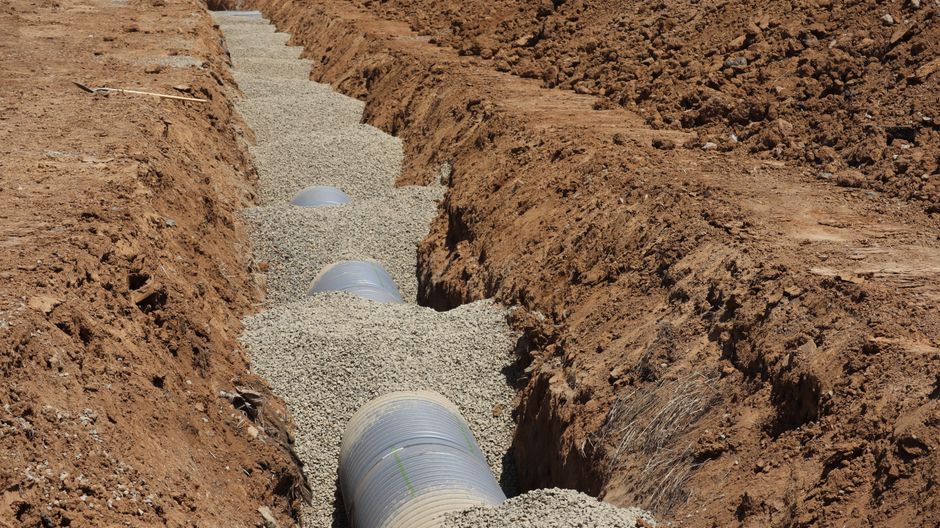
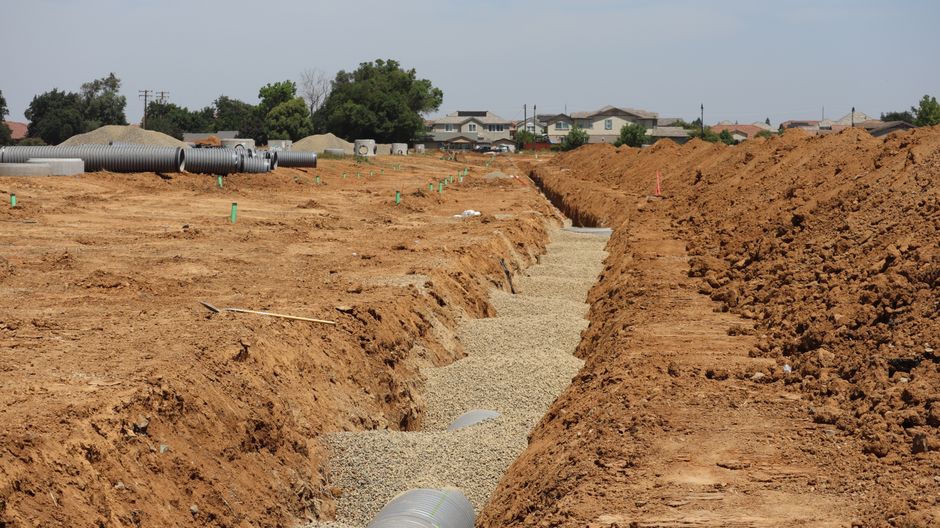
Open-trench work is conceptually simple, an excavator digs down to the pipe along its entire length, but the digging and refilling are most of the bill. Trenchless methods need only one or two access pits: pipe bursting pulls a new pipe through while fracturing the old one outward, and cured-in-place pipe (CIPP) lining installs a resin sleeve inside the existing line. Trenchless equipment and crews cost more per hour, but they leave your driveway, patio, and mature landscaping largely untouched, which is where open-trench jobs quietly get expensive.
4. Surface restoration and site surprises
Everything above the trench has to be paid for twice, once to remove and once to restore. Concrete driveways, sidewalks, porches, fences, sprinkler systems, and mature plantings all add real money, and city sidewalk or street cuts trigger permits, traffic control, and municipal repair standards. A reasonable contingency is 10 to 20 percent, more on older homes where the line’s path, depth, and condition are guesses until the digging starts.
Trenchless or open trench: how the method moves the number
Trenchless is often the better total-cost answer when the line runs under a driveway, a finished patio, mature trees, or a neighbor’s property, because the surface restoration you avoid can exceed the equipment premium several times over. It is not universal: a line that has fully collapsed, lost its slope, or has a sag (a “belly”) holding water usually cannot be lined and may not be burstable, and some cities restrict bursting near other shallow utilities. Open trench remains the default for shallow, accessible runs in open lawn, where digging is cheap and the crew can inspect the new bedding and slope directly. A good contractor should explain which methods your line actually qualifies for, based on the camera footage, not just quote the one method their crew happens to own equipment for.
The sewer is also the natural moment to think about the rest of the home’s water systems, since the trench or access pits sometimes expose the water service and other buried utilities. If the house has ever had groundwater problems, our guide to sump pump replacement cost covers the system that handles water on the other side of the foundation wall, and our breakdown of water heater replacement cost is worth a read if the same aging plumbing era is showing up indoors too.
Signs you need replacement, and when repair is enough
The classic warning signs: multiple drains backing up at once (one slow fixture is a local clog; every fixture gurgling is the main line), sewage odors in the yard or basement, unusually lush or soggy stripes of grass over the line’s path, foundation-area wet spots, and repeated root clogs that return within months of each cleaning. Persistent problems earn a camera inspection, typically $150 to $500 and sometimes credited against later work, which shows exactly what and where the failure is.
Not every bad camera picture means full replacement. A single offset joint, one root intrusion point, or a short crushed section can often be spot-repaired for $1,000 to $5,000, and on an otherwise sound line that targeted fix is usually the rational call. The math flips when the line is Orangeburg or badly spalled clay, when failures are spread along the run, when the pipe has lost slope, or when repair quotes approach a third of replacement. A line that has failed in three places has told you the rest is close behind, and paying for excavation twice is the most expensive way to replace a sewer.
Hidden costs people forget to budget
- Camera inspection and locating: $150 to $500 to see the problem and mark the line’s true path and depth before anyone quotes it.
- Permits and inspections: sewer work is permitted almost everywhere, often a few hundred dollars, more when street or sidewalk cuts are involved.
- City connection and tap fees: work at the main or the property-line cleanout can involve the utility and its fee schedule.
- Concrete and hardscape restoration: driveways, sidewalks, and patios over the line often cost thousands to cut and repour.
- Landscaping: lawns regrow cheaply; mature shrubs and trees in the trench path do not.
- Backwater valve: a few hundred dollars extra during the job, and cheap insurance against city-main backups in low-lying homes.
- Utility conflicts: gas, water, and electric lines crossing the trench slow the dig; always confirm the contractor calls 811 before digging.

Insurance, and how to read and compare sewer quotes like a pro
Standard homeowners policies generally do not cover a sewer line that fails from age, roots, or wear, and many exclude the resulting sewage backup damage unless you carry a specific water-backup endorsement, usually a modest annual add-on that is worth asking about before you need it. Some insurers and utilities also sell service-line coverage for the buried pipes on your side of the property line. The Insurance Information Institute explains how water and backup claims are typically treated at iii.org, worth reading before assuming any of this is covered. Separately, the U.S. Environmental Protection Agency’s homeowner resources at epa.gov cover the septic side for homes not on a city main, where the same buried-pipe logic applies to the tank and drainfield.
Get at least three written, itemized quotes based on the same camera footage, and compare them line by line. Confirm in writing: the method (open trench, burst, or liner) and why the line qualifies for it; pipe material and diameter; the run’s length and depth; who pulls permits and calls in utility locates; whether a cleanout and backwater valve are included; exactly what surface restoration is in scope, concrete, sod, sprinklers, and to what standard; how rock, groundwater, or unexpected depth are priced if encountered; and the warranty on both the pipe and the workmanship. Ask each bidder the same question, “what could make this cost more once you open the ground?”, and note who answers specifically versus who waves it off. A bid thousands below the others has usually left the restoration, the permit, or the depth out of the math, and the gap reappears as a change order with your yard already open.
When to call a licensed plumber (and when it’s not optional)
Handy homeowners can keep roots at bay with periodic augering, avoid flushing wipes and grease, and keep the cleanout accessible. But anything below grade, excavation, slope, bedding, connections at the main, is firmly licensed-contractor territory, both because sewer work is code-regulated and inspected nearly everywhere, and because trench collapses are genuinely lethal; deep excavation requires shoring that no weekend rental covers. Raw sewage is also a health hazard the moment it is out of the pipe. A sewer laid at the wrong slope fails slowly and invisibly, and the second dig costs as much as the first.
The bottom line on sewer line replacement cost: budget roughly $50 to $250 per linear foot installed, expect a typical full replacement to land between $3,000 and $25,000 depending on length, depth, method, and what sits above the line, and pad whatever number you settle on by 15 percent for what the soil is hiding. Since gutters and grading send water toward or away from that same buried pipe zone, our guide to gutter replacement cost covers the cheap surface-water fixes that reduce root pressure and soil movement around the line. The homeowners who feel ripped off are rarely the ones who paid the most, they are the ones who did not know what the number was made of, or who took the cheapest bid and paid for the restoration twice. The cheapest sewer replacement is the one you plan with full information, before a backup forces your hand.
Disclaimer: This article is for general informational purposes only and does not constitute professional plumbing, construction, structural, financial, insurance, or legal advice. Prices cited are broad national estimates that vary significantly by region, site, soil, depth, method, and market conditions, and they change over time. Sewer work involves excavation hazards, buried utilities, permits, and health risks from raw sewage if handled improperly. Always check local code requirements, call 811 before any digging, and hire a licensed plumber or sewer contractor for the actual work.

Marcus Reed is coverhub.fun’s lead contributor on home plumbing and water-system repair. Drawing on more than a decade of hands-on residential service work — supply lines, drains, fixtures, and the kind of emergency leaks that wake a family up at 2 a.m. — Marcus translates the diagnostic playbook that professionals run on every call into language a homeowner can follow at the kitchen sink. His guides walk through the safe, fast checks worth doing before you reach for the phone, plus the exact red flags that mean it really is time to bring in a licensed plumber.
He focuses on the high-cost emergencies that most often catch people unprepared: burst pipes, running toilets that quietly inflate water bills, kitchen drains that back up at the worst time, and shut-off valves no one can find when water is already on the floor. Every guide is written from a ‘try this first’ mindset, with clear safety stops along the way.
Marcus is also the editorial fact-checker for coverhub.fun’s plumbing category. If you have a fix that worked at your house and isn’t covered yet, or a correction on something that is, email editorial@coverhub.fun and he’ll take a look.