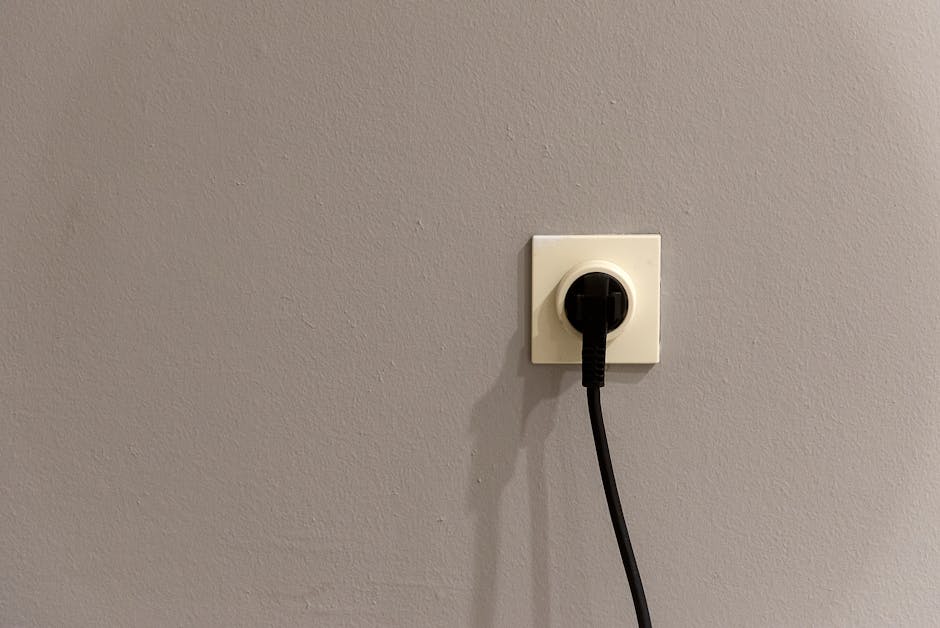
A GFCI keeps tripping in the bathroom, kitchen, garage, or outdoors is one of the most common — and most misunderstood — electrical complaints a homeowner ever runs into. The trip is annoying, but the reason for the trip is almost never “the GFCI is broken.” The whole job of a Ground Fault Circuit Interrupter is to watch for a tiny imbalance between the hot and neutral wires (as little as 4 to 6 milliamps) and cut power within 25 milliseconds when it sees one, because that imbalance is current leaking to ground — often through a wet appliance, a damaged cord, or a person. Before you call a $185 electrician, give yourself 10 minutes. A GFCI keeps tripping is almost always one of five things: a wet outlet, a downstream device with worn insulation, a sloppy neutral-to-ground bond at a junction box, an aging GFCI past its 10-year lifespan, or simple nuisance tripping from a high-leakage appliance. Walk through the six checks below before spending a dollar.
Why a GFCI keeps tripping is rarely a “replace the panel” problem
Electricians see this complaint constantly, and the failure breakdown is remarkably consistent. Roughly 35% of every “GFCI keeps tripping” service call is a downstream outlet or device that has water intrusion — a kitchen outlet behind a coffee maker that leaked, a bathroom outlet that took a steam beating, an outdoor outlet whose gasket failed. Another 25% is a worn appliance cord with a nicked insulation jacket leaking current to its metal chassis. About 15% is a shared neutral or a neutral-to-ground touch at a junction box downstream of the GFCI — the receptacle reads that touch as a ground fault and trips. About 10% is the GFCI itself, simply old (the internal sensing electronics drift after 10 years and need replacement — $20 part). About 10% is a high-leakage appliance like an old freezer or pool pump whose normal leakage is just under the 6 mA threshold until it warms up. And only the final 5% is a true wiring fault that needs deeper investigation. The math is friendly: 95% of these calls are something a careful homeowner can isolate themselves.
Tools you actually need
- A non-contact voltage tester ($12)
- A plug-in outlet tester with GFCI button ($10)
- A Phillips screwdriver and a flat-head
- A flashlight
- Painter’s tape and a marker to label which outlets are downstream of which GFCI
Safety note: Never open an outlet box without first cutting power at the breaker AND confirming dead with the voltage tester at both screws of the receptacle. The fact that a GFCI keeps tripping doesn’t mean the line is dead — the GFCI only cuts the load side, not the line side. Treat every wire as hot until your meter says otherwise.
Step 1: Identify what’s downstream of the GFCI
A GFCI receptacle protects every standard outlet wired to its load terminals — sometimes 4 or 5 outlets in a chain. Before you can fix anything, you need to know what’s actually downstream. Press the TEST button on the suspect GFCI and walk the house with your plug-in outlet tester. Every outlet that goes dead is on the same chain. Tape a label on each one with the marker. About 1 in 4 homeowners discover at this step that a GFCI in the garage is protecting an outdoor outlet they forgot about — one that just took a thunderstorm and is now soaking wet. The fault is almost always at the furthest dead outlet from the GFCI.
Step 2: Unplug everything downstream and reset
This is the single highest-payoff move for a GFCI keeps tripping diagnosis. Unplug every appliance, lamp, charger, and extension cord on the protected chain — including ones you forgot about behind the fridge or under the workbench. Press RESET. If the GFCI holds with zero loads connected, the receptacle itself is healthy and the fault is in one of the appliances. Plug them back in one at a time, leaving each for 60 seconds before adding the next. When the GFCI trips, the last thing you plugged in is the culprit — usually an old toaster, a hair dryer with a frayed cord, a corroded outdoor light, or a freezer with leaky compressor windings. Throw out, repair, or replace that device and the problem is solved.

Step 3: Check for water and corrosion at every downstream outlet
If the GFCI trips even with nothing plugged in downstream, water intrusion is your next suspect. Cut the breaker, confirm dead, and pull the cover plate off every outlet on the chain. Look for: green or white powder on the screws (corrosion), moisture inside the box, daylight visible behind the box from outside, or insect nests. Outdoor outlets are the worst offenders — a “weatherproof” cover that’s missing its inner gasket lets rain pool inside the box for years. Dry the box thoroughly, replace any corroded receptacle ($3 part), and verify the in-use cover seal. The same outlet-inspection logic from our dead outlet walk-through applies directly here.
Step 4: Inspect for a downstream neutral-to-ground touch
If everything is dry and unloaded but the GFCI still trips on reset, the next culprit is a wiring mistake further down the chain — specifically, a neutral wire touching the ground bar or a bare ground wire at a junction box. GFCIs see this touch as a current path and trip instantly. Cut power, open each downstream box, and look for any white neutral wire whose stripped end is touching a green or bare ground wire, a metal box edge, or another neutral from a different circuit. Re-cap with a fresh wire nut. If you have a multi-wire branch circuit (shared neutral), a GFCI feeding it will trip every time — that’s not a fault to fix, that’s a wiring incompatibility and the GFCI needs to be relocated. The same diagnostic mindset applies to circuit breakers that keep tripping, just at a higher current threshold.
Step 5: Replace the GFCI itself if it’s over 10 years old
GFCI receptacles have a documented end-of-life of 10 to 15 years — the internal sensing transformer drifts, and the trip threshold creeps from 6 mA down toward 2 mA, where normal appliance leakage now triggers it. Look at the manufacturer’s date stamp on the back of the device (visible when you pull it from the box). Anything older than 2014 is a strong candidate for retirement. A modern self-testing GFCI is $18 to $22 and a 10-minute swap: kill the breaker, unscrew the old device, transfer the line wires to LINE and the downstream wires to LOAD (this orientation matters — reversed wiring is the #1 DIY mistake), screw the new one in, restore power, and press TEST. OSHA’s electrical-safety standards recommend GFCI replacement on any device that fails its monthly self-test.

Step 6: When to actually call an electrician
Call a pro only if: the GFCI keeps tripping with no appliances plugged in, every downstream outlet dry, no neutral-to-ground touches visible, and a brand-new replacement device installed correctly — that combination means there’s an upstream fault in concealed wiring (a damaged cable inside the wall, a stapled-through Romex, or a junction box behind drywall) and you need a tone tracer or insulation tester to find it. Also call if the GFCI trips the moment a specific large appliance starts and you’ve confirmed the appliance is healthy; in rare cases a heat pump, well pump, or hot tub circuit needs a “GFCI-equipment-protective device” with a higher 30 mA threshold instead of the standard 6 mA personnel device. The NFPA’s home electrical safety guidance is the cleanest starting point for understanding which circuits require GFCI vs AFCI protection. And while you’re thinking about household electrical health, our ceiling fan walk-through is a good companion read for the rest of the rooms.
One last habit: press the TEST button on every GFCI in your house once a month, replace any device that’s more than 10 years old whether it’s tripping or not, and never plug a freezer, sump pump, or pool pump into a personnel-protection GFCI unless the manufacturer explicitly allows it. Those three rules will keep nearly any home’s ground-fault protection healthy and keep “GFCI keeps tripping” from becoming your problem in the first place. The cheapest repair is the one you prevent.

Elena Park covers home electrical and HVAC topics for coverhub.fun. Her background in residential electrical service work — outlets, breakers, GFCIs, central air conditioning, and the steady stream of small failures that send most homeowners straight to a service tech — shapes the way her guides are written: figure out what’s actually wrong first, then decide whether you’re looking at a $0 reset or a real repair.
Elena focuses on the service calls that most often turn out to be DIY-safe: a single dead outlet that’s really a tripped GFCI two rooms over, a thermostat that’s reading wrong, a clogged AC condensate line, or a frozen evaporator coil masquerading as a dying compressor. She’s just as clear-eyed about the work that does not belong in a homeowner’s hands — anything inside the main electrical panel, any sustained burning smell, any breaker that won’t stay reset.
Each piece on her byline gets a final safety pass before publishing. Suggestions, corrections, and reader questions are welcome at editorial@coverhub.fun.