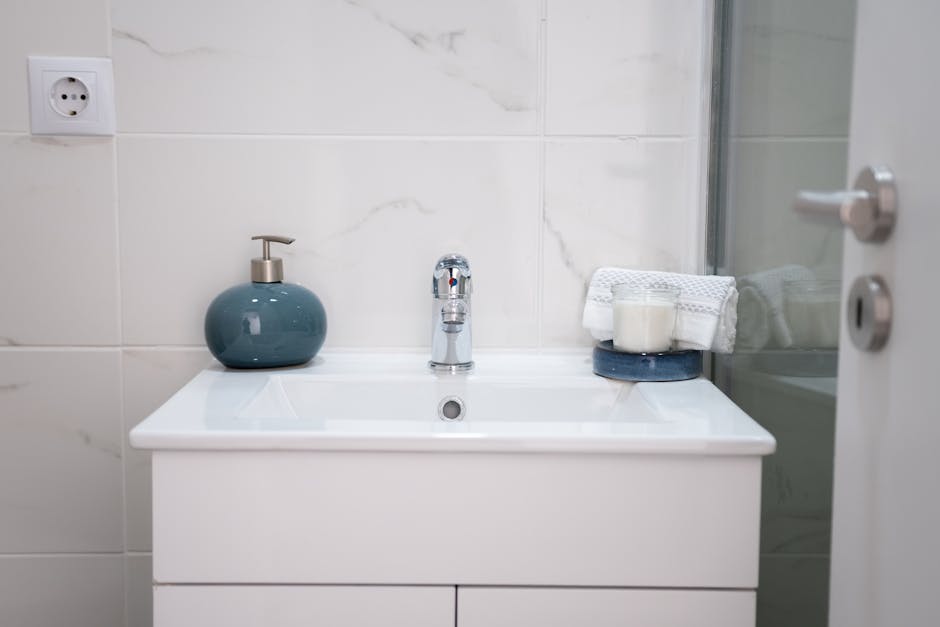
A bathroom sink slow drain — you turn the tap and the basin holds half an inch of water before it grudgingly empties, the toothpaste film stays around the rim, a gurgle echoes up from below, and the whole vanity smells faintly of damp — is the single most common bathroom complaint in any U.S. home and one of the most consistently overdiagnosed. People assume the entire drain run is failing or that they’ll need the plumber to snake the wall stack; in reality, almost every bathroom sink slow drain traces to a soft plug of hair, soap scum, and toothpaste paste sitting in the very top six inches of the drain assembly, exactly where you can reach it in under 20 minutes with no tools beyond a flashlight and a wire coat hanger. Before you book a $160 plumber visit, give yourself half an hour. A bathroom sink slow drain is almost always one of five things: a hair mat tangled in the pop-up stopper, a soap-and-toothpaste slug built up inside the tailpiece, a partial clog in the P-trap directly beneath the basin, a vent stack starved for air on the roof, or a slip-joint nut that has loosened just enough to leak air and slow the flow. Walk through the six checks below before spending a dollar.
Why a bathroom sink slow drain is almost never a “snake the line” problem
Working plumbers see this complaint every single day, and the failure breakdown is remarkably consistent across every house, apartment, and condo they walk into. Roughly 55% of every bathroom sink slow drain call is a hair-and-soap mat tangled around the underside of the pop-up stopper, sitting maybe two inches below the rim of the basin — an owner who has lived with the sink for years has almost never lifted the stopper out, and a decade of shed hair and conditioner film makes a slowly thickening dam right at the choke point. Another 20% is a soft tube of soap and toothpaste paste built up inside the chrome tailpiece between the basin and the P-trap, in the next four inches of the drain run. About 10% is a partial clog inside the P-trap itself — the U-shaped bend that holds the water seal — usually a wad of dental floss or a piece of paper that caught on a slip joint. About 10% is a roof vent partially blocked by leaves, a nest, or frost, starving the line of air so the water glugs down instead of flowing. The remaining 5% is a deeper main-line problem that genuinely needs a plumber’s auger. The math is friendly: 95% of bathroom sink slow drain complaints clear with the basic six-step approach below.
Tools you actually need
- A wire coat hanger straightened out with a small hook bent in one end
- A pair of channel-lock pliers (or just sturdy adjustable pliers)
- A small bucket and a roll of paper towels
- A flashlight
- A box of baking soda and a quart of plain white vinegar
- A kettle of boiling water (used only at the end)
- Rubber gloves — what you pull out is going to be ugly
Before you start: clear everything out from inside the vanity cabinet so you have unobstructed access to the trap, and lay a towel down on the cabinet floor — whatever drains out of the trap during the cleaning is going to be cloudy gray water you do not want soaking into the particleboard. Open the bathroom window or run the exhaust fan. If you smell sulfur or sewage rising from the drain even when the water seal looks intact, the diagnostic overlaps with our shower drain smells walk-through, which covers the vent-stack and biofilm side of the same problem.
Step 1: Pull the pop-up stopper and clear the hair mat
This is the single highest-payoff move for any bathroom sink slow drain diagnosis and the one almost no homeowner has ever done. Reach under the basin and find the pop-up linkage — a horizontal rod entering the back of the drain body, connected to a vertical pull rod that runs up to the lift knob on the faucet. Unscrew the pivot nut on the back of the drain body (turn counterclockwise) and slide the horizontal rod out about an inch. The pop-up stopper inside the basin will now lift straight out. Look at it under the flashlight: you will almost certainly see a dense black-and-gray mat of hair and soap paste wrapped around the rubber gasket and the lower stem — that mat is your clog. Pull it off with a paper towel, rinse the stopper under the tub tap, reseat it, and reconnect the linkage. About 50% of homeowners are done at this single step and never need to open the trap at all.
Step 2: Snake the tailpiece with the coat hanger
If pulling the stopper revealed only a small amount of hair and the bathroom sink slow drain is still slow, push the bent end of the coat hanger straight down through the drain opening. The hook will travel about four inches before it hits the bend at the top of the P-trap. Twist the hanger slowly as you draw it back up — you will almost always feel slight resistance, and when you pull the hook clear you will see a string of slimy paste wrapped around it. Wipe the hook on a paper towel and repeat two or three times until you draw clean. A bathroom sink slow drain caused by tailpiece buildup clears at this step about 25% of the time, especially in households where the people brushing their teeth at the sink are heavy users of whitening toothpaste, which leaves a particularly stubborn film.
Step 3: Open the P-trap and clean it out
If steps 1 and 2 didn’t fully clear the line, it’s time for the P-trap. Place the bucket under the trap to catch the residual standing water. Loosen both slip-joint nuts (the white plastic or chrome rings at each end of the U-bend) by hand or with channel-lock pliers using only firm finger pressure — plastic nuts crack if you over-torque them. The trap will drop free; tip it into the bucket and rinse with the tap. Inside you will almost certainly find a tangle of hair, a piece of paper, dental floss, or a small object the kids dropped down the drain (a Lego brick, a small earring, a bobby pin — the list is endless). Wipe the slip-joint washers, hand-tight the nuts back on (no tool needed, just firm finger pressure), and run the tap for 30 seconds while you watch the trap from below for any drip. A bathroom sink slow drain that still resisted after step 2 clears completely at this step about 15% of the time.
Step 4: Flush with baking soda, vinegar, and boiling water
With the trap clean and reassembled, run a final flush to dissolve any remaining soap film on the inside of the drain walls. Pour half a cup of baking soda directly into the drain. Follow with a cup of plain white vinegar — you’ll hear it foam vigorously as the two react. Cap the drain with the stopper for 10 minutes so the foam works its way down the walls. Then pour a full kettle of boiling water down the drain in one long steady stream. The combination flush dissolves residual scum, deodorizes the line, and rinses the loosened debris clear. Repeat this monthly and you will likely never see a bathroom sink slow drain in this basin again. Skip commercial caustic drain cleaners — they damage chrome finishes, corrode brass fittings over time, and rarely outperform the baking-soda-and-vinegar combination on a clog that was already broken up by hand. If you notice the basin fills faster than it drains even when the line itself is clear, the supply side may be the bigger issue and our leaking faucet walk-through covers the diagnostic for a faucet that won’t shut off cleanly.
Step 5: Check the roof vent if the basin still gurgles
If the bathroom sink slow drain now drains fine but you still hear a loud gurgle from the basin every time a nearby toilet flushes, the problem has moved from the line itself to the venting. Every fixture in your house ties into a vent stack that exits through the roof, allowing air to enter behind the draining water so it flows smoothly instead of glug-glug-glug under negative pressure. If the vent is partially blocked — usually by leaves, a tennis ball, a bird nest, or frost in northern winters — the line behind the water column goes into vacuum and the sink drains slowly or gurgles air back out. From the ground you can usually see the vent pipe sticking up through the roof near the bathroom; if you’re comfortable on a ladder, look down into it with a flashlight and clear any obvious obstruction. The same vent-stack diagnostic that fixes shower gurgles applies identically here, and our clogged drain walk-through covers the deeper stack-blockage logic if step 5 reveals a more serious vent issue.
Step 6: When to actually call a plumber
Call a pro only if: the stopper is clean, the tailpiece is clear, the P-trap is open, the baking-soda flush ran through fast, and the vent looks unobstructed, yet a bathroom sink slow drain persists. That combination points to a clog further down the branch arm where it joins the main stack — usually 4 to 12 feet behind the wall, beyond what a coat hanger can reach. A plumber with a 25-foot drum auger clears that in 15 minutes; you don’t want to attempt it with a rented tool unless you’ve used an auger before, because it’s easy to scratch the drain walls or get the cable stuck. Also call if you see water dripping from a slip-joint nut after you’ve hand-tightened it twice — that usually means a cracked washer or a hairline crack in the trap arm itself, and replacing the whole trap kit is a $12 part but worth a once-a-decade pro install if you’re not handy with PVC. The EPA’s WaterSense program publishes helpful guidance on bathroom water efficiency and fixture maintenance worth bookmarking. For the deeper venting-and-stack code reference, the International Plumbing Code overview from ICC explains the vent geometry behind step 5 in plain language.
One last habit: pull the stopper and clean the hair off it every 60 days, run the baking-soda-and-vinegar flush monthly, and never let anyone in the household use the bathroom sink to rinse hair-clipper trimmings or oil-based makeup brushes — both are the leading causes of repeat clogs. Those three rules together will keep a bathroom sink slow drain from being your problem for the next decade. The cheapest plumber visit is the one you never need to schedule.

Marcus Reed is coverhub.fun’s lead contributor on home plumbing and water-system repair. Drawing on more than a decade of hands-on residential service work — supply lines, drains, fixtures, and the kind of emergency leaks that wake a family up at 2 a.m. — Marcus translates the diagnostic playbook that professionals run on every call into language a homeowner can follow at the kitchen sink. His guides walk through the safe, fast checks worth doing before you reach for the phone, plus the exact red flags that mean it really is time to bring in a licensed plumber.
He focuses on the high-cost emergencies that most often catch people unprepared: burst pipes, running toilets that quietly inflate water bills, kitchen drains that back up at the worst time, and shut-off valves no one can find when water is already on the floor. Every guide is written from a ‘try this first’ mindset, with clear safety stops along the way.
Marcus is also the editorial fact-checker for coverhub.fun’s plumbing category. If you have a fix that worked at your house and isn’t covered yet, or a correction on something that is, email editorial@coverhub.fun and he’ll take a look.