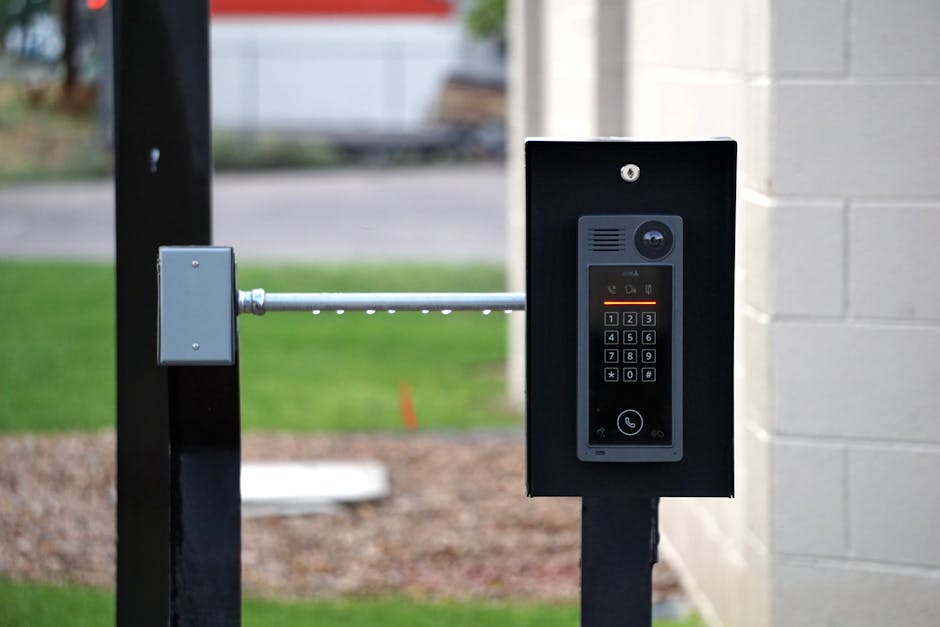
A doorbell not working is one of those small-house annoyances that quietly costs you more than you’d guess — missed deliveries, missed visitors, missed services who knocked once and gave up. Before you spend $130 on an electrician’s minimum service call, give yourself 15 minutes. A doorbell not working is almost always one of five things: a stuck or dirty pushbutton, a failed low-voltage transformer hidden somewhere in the house, a broken bell wire between button and chime, a chime unit whose mechanical plunger has gummed up with dust, or (on a wired-to-smart conversion) the wrong combination of transformer voltage and the new device’s power requirements. Walk through the six checks below before spending a dollar — everything in a wired doorbell system runs on 16 to 24 volts AC, which is genuinely homeowner-safe to touch.
Why a doorbell not working is rarely a “rip out the wiring” problem
Electricians see this complaint constantly, and the failure breakdown is remarkably consistent. Roughly 45% of every doorbell not working service call is the pushbutton itself — either a corroded contact behind years of rain, or a $4 button that’s simply worn out after 50,000 presses. Another 20% is a chime plunger inside the indoor unit that has stuck open from dust or dried lubricant. About 15% is a broken or corroded low-voltage wire somewhere in the run between transformer, button, and chime — staples driven through the wire during a remodel are a classic cause. About 10% is a failed transformer (often hidden in a basement, attic, or closet ceiling and never serviced). About 7% is a smart doorbell conversion gone wrong — the existing 10 VA transformer can’t power a Wi-Fi camera doorbell that needs 20 VA. And only the final 3% is a more serious wiring fault. The math is friendly: 97% of these calls are a sub-$15 part and a 15-minute repair.
Tools you actually need
- A multimeter ($15) set to AC volts and continuity
- A Phillips screwdriver and a small flat-head
- A flashlight
- Fine sandpaper or a contact-cleaner spray
- A spare 18- to 20-gauge bell wire ($8 for 50 ft)
- Wire strippers and small alligator-clip jumper leads
Before you start: A wired doorbell runs on 16 to 24 VAC stepped down by a transformer that sits on a junction box somewhere in the house. You do not have to turn off any breakers to touch button or chime wires — the voltage is below the human-perception threshold. The only exception is when you work on the transformer itself, which has line-voltage 120 VAC on its primary side. Then you absolutely cut the breaker, using the same caution we cover in our dead outlet walk-through.
Step 1: Jumper the pushbutton terminals at the door
This is the single highest-payoff move for a doorbell not working diagnosis and takes 30 seconds. Unscrew the pushbutton from the door frame, pull it forward, and you’ll see two small screws holding two wires. Touch the two wires together (or jumper them with a screwdriver shaft). If the chime rings, the whole rest of the system is healthy and the button is the only failure — a $4 replacement and a 5-minute swap. If the chime is silent, the failure is further upstream and you move on. About 1 in 2 homeowners are done at this step.
Step 2: Find and test the transformer
Locate the doorbell transformer — a small block that mounts to a junction box and steps line voltage down to 16 or 24 VAC. Common hiding spots: attached to the side of the main panel, on top of the main panel, in the basement ceiling near the front door, in an attic close to the bell wire run, inside a closet ceiling, or above a HVAC return. Look for a small bracket with two low-voltage screws facing out. Set the multimeter to AC volts, touch the leads to the two low-voltage screws, and read the output. You should see 16 to 24 VAC, depending on the spec stamped on the transformer’s nameplate. If you read 0 V, the transformer or its 120 V feed is dead — check the breaker, then replace the transformer ($20). If you read above or below spec, replace the transformer.

Step 3: Inspect the pushbutton itself
If the chime rang during the jumper test in Step 1, your fault is in the button. Look at the two contact screws and the small spring mechanism. Years of outdoor weather usually leave green-brown corrosion that prevents conduction. Disconnect the two wires, scrub the metal contacts with fine sandpaper or hit them with electrical contact cleaner, and reconnect. If the contacts have eroded into pits, just replace the button — a lighted or unlit pushbutton is $4 to $12. While you’re at it, dab a tiny amount of dielectric grease behind the contacts before mounting; that single step adds years of weather resistance.
Step 4: Service the chime unit
If the transformer outputs the correct voltage but the chime is silent even with the button shorted, the chime itself is the suspect. Pop the cover off the indoor chime — usually it slides up or has one center screw. You’ll see two solenoids with steel plungers that strike the chime bars when energized. Dust and dried lubricant inside the solenoid coil make the plunger sluggish or stuck. Pull each plunger out, wipe with a dry cloth (never oil — oil collects dust and makes it worse), and reseat. While the cover is off, jumper the “front” and “trans” terminals briefly; one plunger should snap forward. Repeat for the back-door circuit if you have one. The NFPA’s home electrical safety guidance covers the broader low-voltage signaling logic if you want context.
Step 5: Trace and repair the bell wire run
If transformer, button, and chime all check out individually but a doorbell not working symptom returns when everything is reassembled, the bell wire between them is broken or shorted. This usually happened during a remodel where someone drove a finish nail through the wire inside a wall. Disconnect both ends, set the multimeter to continuity, and test end-to-end. No beep means the run is broken. The fastest fix is rarely to chase the break inside a wall — instead, run a new 18- or 20-gauge bell wire along the basement ceiling, up through a closet, and out to the door. The same diagnostic mindset works for hunting any low-voltage wiring problem and pairs well with our GFCI walk-through for whole-house electrical health.

Step 6: When to actually call an electrician
Call a pro only if: the transformer is in an inaccessible location (drywall ceiling with no attic access), the run is buried inside a finished wall and you don’t want to surface-mount a replacement, or you’re upgrading to a smart video doorbell and your existing 10 VA transformer isn’t enough to power the new device. Smart doorbells from major brands usually require 20 to 30 VA at 16 to 24 VAC; if you read 8 VAC at the button on your meter, the transformer needs swapping before the new device will work right. Don’t be tempted by quick fixes like daisy-chaining old transformers — spend the $25 on a properly-rated unit. OSHA’s electrical-safety guidance is the cleanest reference for handling line-voltage work on the primary side of the transformer.
One last habit: press your doorbell button once a month to make sure it still rings, dab dielectric grease on the button contacts every spring before pollen season, and label your transformer when you find it so the next homeowner doesn’t spend an hour hunting for it. Those three rules will keep nearly any doorbell working for the next 20 years and keep “doorbell not working” from becoming your problem in the first place. The cheapest repair is the one you prevent.

Elena Park covers home electrical and HVAC topics for coverhub.fun. Her background in residential electrical service work — outlets, breakers, GFCIs, central air conditioning, and the steady stream of small failures that send most homeowners straight to a service tech — shapes the way her guides are written: figure out what’s actually wrong first, then decide whether you’re looking at a $0 reset or a real repair.
Elena focuses on the service calls that most often turn out to be DIY-safe: a single dead outlet that’s really a tripped GFCI two rooms over, a thermostat that’s reading wrong, a clogged AC condensate line, or a frozen evaporator coil masquerading as a dying compressor. She’s just as clear-eyed about the work that does not belong in a homeowner’s hands — anything inside the main electrical panel, any sustained burning smell, any breaker that won’t stay reset.
Each piece on her byline gets a final safety pass before publishing. Suggestions, corrections, and reader questions are welcome at editorial@coverhub.fun.