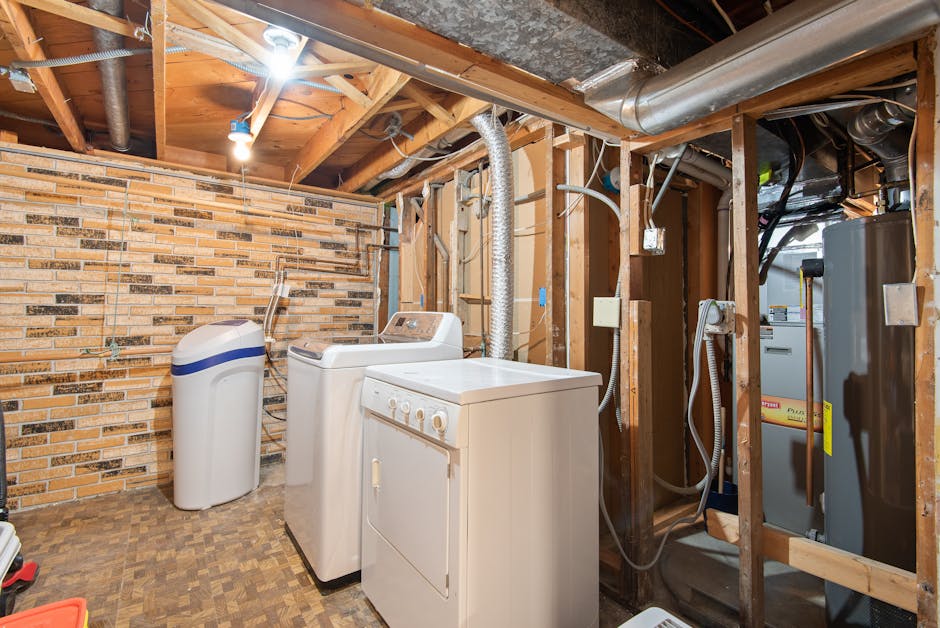
A water heater leaking — you walk into the utility closet or the garage corner and find a slow puddle creeping out from under the tank, a hissing sound from the side, or a steady drip running down the discharge tube near the ceiling — is the home emergency that most often pushes homeowners straight to a same-day plumber call and a $250 to $400 bill. It does not need to. The vast majority of a water heater leaking situation traces to one of six very specific failure points, every one of which you can identify and almost always fix in 30 minutes with a flashlight, a pair of channel-lock pliers, and a roll of teflon tape. Before you book the plumber, give yourself half an hour. A water heater leaking is almost always one of these: the temperature-and-pressure (T&P) relief valve discharging because of thermal expansion, the brass drain valve at the bottom dripping past a worn washer, a loose hot or cold supply union at the top, a corroded nipple at the anode rod port, harmless condensation rolling off a cold tank in a humid space, or — and only at the bottom of the list — a failed tank that genuinely needs replacement. Walk through the six checks below before you spend a dollar.
Why a water heater leaking is almost never “replace the tank”
Working plumbers see this complaint every winter and the breakdown is remarkably consistent across every garage, basement, and utility closet they walk into. Roughly 35% of every water heater leaking call is the T&P valve discharging on purpose — the safety valve at the side of the tank is doing its job, releasing a small amount of water because pressure inside the tank briefly exceeded 150 psi or temperature climbed past 210°F. Another 25% is the brass drain valve at the bottom of the tank dripping past a worn rubber washer; a quarter turn with channel-locks usually stops it cold. About 15% is a loose hot or cold dielectric union at the top of the tank, where a faint drip rolls down the side of the tank and looks like the tank itself is weeping. About 10% is the anode rod port, where the hex plug at the top of the tank corrodes and starts a slow seep. About 10% is plain condensation — cold incoming water meeting a humid garage in summer rolls down the tank and pools at the base, looking exactly like a leak that isn’t one. The remaining 5% is a tank that has genuinely rusted through from the inside out and needs replacement — you can identify this one within 60 seconds, because the leak is coming from the bottom seam, not any fitting. The math is friendly: 95% of a water heater leaking complaint is a fitting issue, not a tank issue.
Tools you actually need
- A flashlight and a roll of paper towels
- A pair of channel-lock pliers and an adjustable wrench
- A roll of plumbers’ teflon tape (white, half-inch)
- A garden hose long enough to reach a floor drain or outside
- A 5-gallon bucket and rubber gloves
- A bathroom scale (only if you want to confirm a T&P discharge)
Before you start: turn the gas control knob to the “Pilot” position (on a gas heater) or flip the breaker labeled “water heater” off at the panel (on an electric heater) before touching any fitting. Shut the cold-water supply valve directly above the tank a quarter turn so it crosses the pipe — this isolates the tank from house pressure while you work. Lay down a couple of old towels at the base of the tank so you can see exactly where new drips appear over the next ten minutes. If the leak is gushing rather than dripping — a real pipe burst, not a fitting drip — stop the diagnostic and switch to our burst pipe first-10-minutes walk-through, which covers main-shutoff and water-damage triage. If the tank is putting out no hot water at all alongside the leak, the heating-element side overlaps with our water heater no hot water guide.
Step 1: Locate the leak with paper towels
This is the single highest-payoff move for any water heater leaking diagnosis and the one almost no homeowner does properly. Dry the entire outside of the tank with paper towels — the top fittings, the sides, the bottom skirt, the floor around the base. Then wrap a single sheet of paper towel loosely around each suspect spot: one around the cold inlet union at the top, one around the hot outlet union, one around the T&P valve on the side, one around the drain valve at the bottom, and one laid flat on the floor next to the bottom seam. Wait 15 minutes with the cold supply re-opened and the heater warming. The first towel to turn wet tells you exactly which fitting is the source, and 70% of homeowners are done diagnosing within this single step. Without it, you’ll chase the wrong fitting for an hour.
Step 2: T&P valve discharging
If the wet towel is the one around the T&P relief valve — the brass lever sticking out of the side or top of the tank, with a copper or CPVC tube running down to within six inches of the floor — the valve is discharging because the tank just exceeded its pressure or temperature setpoint. Check two things. First, the thermostat dial on the front of the tank: it should be set between 120°F and 125°F. If it’s at 140°F or higher, turn it down to 120 and wait an hour; the discharge usually stops as the tank cycles down. Second, look for a thermal expansion tank — a small football-sized blue tank teed off the cold supply line just above the heater. If your house has a pressure-reducing valve or backflow preventer at the main (almost every house built after 1995 in the U.S.), code requires an expansion tank to absorb the small volume of water that expands as the tank heats; without one, the T&P valve becomes the de-facto expansion vent and discharges every cycle. A new expansion tank is a $40 part and a 20-minute install. About 25% of a water heater leaking that traces to the T&P clears with a thermostat adjustment alone.
Step 3: Drain valve drip at the bottom
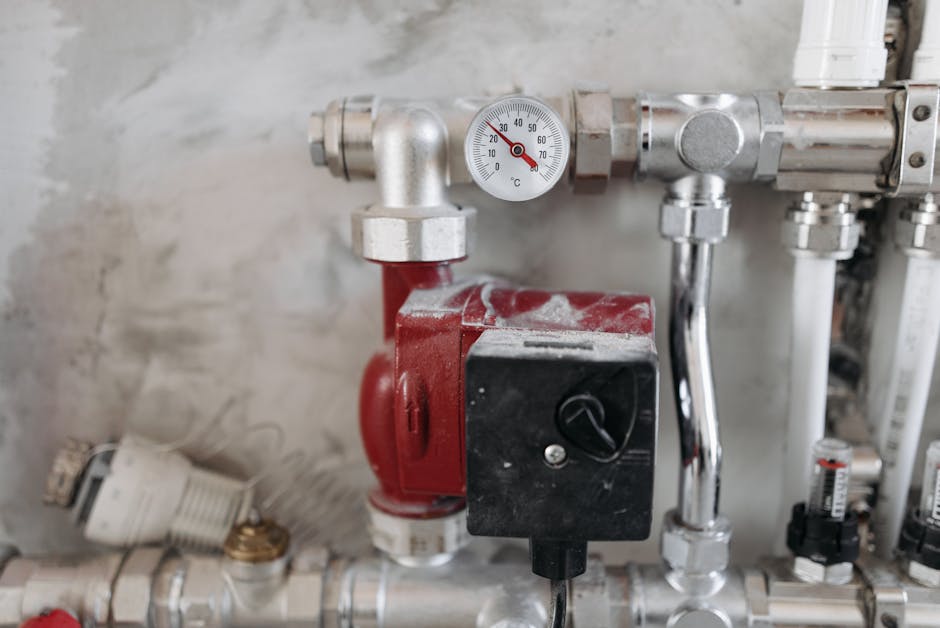
If the wet towel is the one wrapped around the brass drain valve at the bottom of the tank, you have the easiest of all fixes. Thread a garden hose onto the drain valve and run the other end to a floor drain or outside. Open the valve fully for 30 seconds to flush any sediment off the rubber washer inside the seat, then close it firmly by hand — not with pliers, which will crush the plastic handle. Wipe dry and re-check with a fresh paper towel. If the drip resumes within 10 minutes, the washer behind the handle has worn out and the simplest fix is to replace the entire drain valve with a brass ball-valve replacement ($12 at any hardware store, 15 minutes to swap with the tank cold and drained). About 25% of a water heater leaking is solved permanently at this step. Do not over-tighten the original valve trying to seal it — you can crack the threaded port in the tank, which turns a $12 fix into a $700 tank replacement.
Step 4: Loose hot or cold union at the top
If the wet towel is one of the two at the top of the tank, you have a loose dielectric union or a failed teflon seal at the hot or cold connection. Shut the cold supply valve above the tank, open a hot tap somewhere in the house to bleed pressure, then snug the union nut a quarter turn with channel-lock pliers — just a quarter turn, not a full turn. Re-open the cold supply, run the hot tap for 30 seconds, and re-check the towel. If the drip resumes, the union internal washer has failed; unscrew the union completely, replace the rubber washer ($1 at a plumbing aisle), wrap the male threads with three turns of teflon tape, and reassemble. About 15% of a water heater leaking solves at this step. While you’re up there, look at the cold inlet for any green corrosion crust around the nipple — if the dielectric nipple itself has corroded through (typical after 12 to 15 years), that’s a $20 part swap, not a tank failure.
Step 5: Rule out plain condensation
If the wet towel is the one on the floor next to the bottom seam, do not declare the tank dead yet. In summer, in a humid garage or basement, the cold incoming-water side of the tank can drop the outside steel skin below the room’s dew point and cause real condensation to roll down the side and pool at the base. The give-away: the water is clear, has no rust or sediment in it, and only appears for the first hour after a heavy hot-water draw (laundry, multiple showers) when the tank is refilling with cold water. To confirm, dry the tank, then dump a single load of hot water (run the shower hot for 5 minutes). If a puddle reappears within 30 minutes and goes away by the next morning, you have condensation, not a leak. The fix is a dehumidifier in the space, better ventilation, or insulating the cold inlet pipe for the first three feet with foam pipe insulation. Switching to a heat-pump water heater eliminates this entirely because the unit cools and dehumidifies the surrounding air as part of its operation — our heat pump diagnostic walk-through covers the broader heat-pump troubleshooting approach if you’re already running one.
Step 6: When to actually call a plumber (or replace the tank)
Call a plumber, or budget to replace the tank, only if: the T&P valve is closed and dry, the drain valve is closed and dry, both top unions are tight and dry, condensation has been ruled out, and the leak is coming straight from the bottom seam of the tank itself. That combination means the glass-lined steel tank has rusted through internally — almost always because the sacrificial anode rod was never replaced and gave out 8 to 10 years into a typical 12-year tank life. A new 50-gallon tank installed runs $1,400 to $2,000 in most U.S. metros; the tank itself is $600, the rest is labor, code-required pan and shutoff upgrades, and disposal. If the tank is under 8 years old, it’s worth calling the manufacturer first — many tanks have a 6 to 12 year warranty and you may get a free replacement tank (you still pay the install). The U.S. Department of Energy’s water heater guide on energy.gov covers tank sizing, fuel-type tradeoffs, and the heat-pump option in plain language. The EPA’s WaterSense program lists certified efficient models worth comparing before you replace.
One last habit: flush a gallon out of the drain valve every six months, replace the anode rod at year five and year ten (a $30 part and a 30-minute job with a long socket), and never set the thermostat above 125°F. Those three rules together will get you 15 years out of a tank rated for 12. The cheapest plumber visit is the one you never need to schedule.

Marcus Reed is coverhub.fun’s lead contributor on home plumbing and water-system repair. Drawing on more than a decade of hands-on residential service work — supply lines, drains, fixtures, and the kind of emergency leaks that wake a family up at 2 a.m. — Marcus translates the diagnostic playbook that professionals run on every call into language a homeowner can follow at the kitchen sink. His guides walk through the safe, fast checks worth doing before you reach for the phone, plus the exact red flags that mean it really is time to bring in a licensed plumber.
He focuses on the high-cost emergencies that most often catch people unprepared: burst pipes, running toilets that quietly inflate water bills, kitchen drains that back up at the worst time, and shut-off valves no one can find when water is already on the floor. Every guide is written from a ‘try this first’ mindset, with clear safety stops along the way.
Marcus is also the editorial fact-checker for coverhub.fun’s plumbing category. If you have a fix that worked at your house and isn’t covered yet, or a correction on something that is, email editorial@coverhub.fun and he’ll take a look.