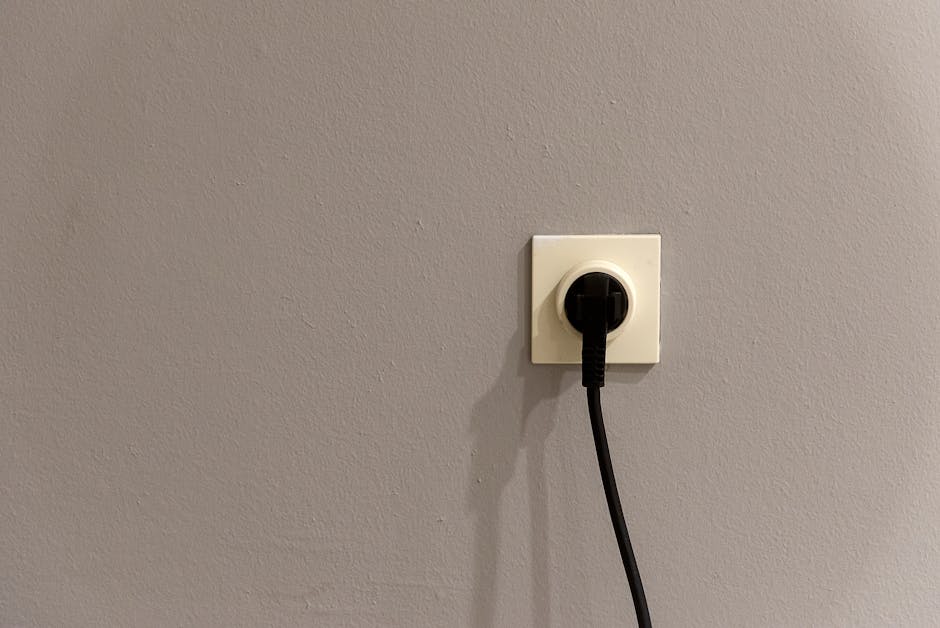
An outlet sparking — you push a plug into a wall receptacle and see a sharp blue flash at the prongs, smell a faint burnt-plastic tang, hear a soft pop, or notice a brown scorch mark creeping out from the slot — is the household electrical complaint that triggers the fastest panic call to an electrician and the largest emergency-rate invoice when one shows up. It is also one of the most overdiagnosed problems in residential wiring. A small blue arc when you plug in a vacuum, microwave, or hair dryer is in fact normal physics and does not mean your outlet is dying. A larger, sustained, or repeated outlet sparking is a serious safety issue, but it almost always traces to a fixable root cause you can identify in 20 minutes with a flashlight, a screwdriver, and a non-contact voltage tester. Before you call a $190 electrician, work through the six checks below. An outlet sparking is almost always one of these: a normal load-arc as a high-draw appliance closes the circuit, a loose backstab terminal inside the receptacle housing, a worn receptacle whose internal contacts no longer grip the plug prongs, a damaged appliance cord or plug, moisture sitting inside the outlet, or a true wiring fault — backstab failure on aluminum branch wiring, a loose neutral, or a daisy-chained overload — that genuinely needs a licensed electrician. Walk through the six checks below before you spend a dollar.
Why an outlet sparking is almost never “rewire the whole circuit”
Working electricians see this complaint every week and the failure breakdown is consistent across virtually every U.S. home built between 1965 and 2005. Roughly 40% of every outlet sparking call is a small, single, normal load-arc that the homeowner noticed for the first time and assumed was new. When you plug in a device that draws significant current at startup — a vacuum cleaner, a microwave, a hair dryer, a window AC, a power tool — the moment the prongs first touch the contacts inside the outlet, the inrush current closes the gap with a brief arc that you see as a quick blue flash and hear as a soft snap. That is not a fault. Another 25% of the call volume is a loose backstab connection inside the receptacle housing — the push-in terminals on cheap builder-grade outlets vibrate loose over a decade and the contact point inside heats up, sparks, and eventually browns the plastic around the slot. About 15% is the receptacle itself wearing out: the internal brass clips that grip a plug have lost spring tension after years of insertions, and the plug rocks in the slot during use, producing intermittent arcing. About 10% is a damaged appliance cord or molded plug — a frayed conductor or a cracked plug body that is the actual source, not the wall outlet at all. About 5% is moisture inside the receptacle (kitchen splashes, bathroom condensation, garage humidity) bridging the contacts. The remaining 5% is true branch-wiring trouble — aluminum wire termination failure, a loose neutral upstream, or chronic overload — that genuinely needs a licensed electrician. The math is friendly: 90% of an outlet sparking complaint solves at the receptacle or the cord, not in the wall.
Tools you actually need
- A non-contact voltage tester (the yellow pen-style one, $12 at any hardware store)
- A Phillips and a flat-blade screwdriver
- A flashlight
- A pair of needle-nose pliers
- A small roll of black electrical tape
- A spare 15-amp tamper-resistant duplex receptacle ($3 at any hardware store) — only if step 3 confirms a worn outlet
Before you start: flip off the breaker that feeds the suspect outlet at the main panel. Confirm power is dead by holding the non-contact tester against the slots — it should not beep or light up. Never trust the breaker label alone; an outlet sparking diagnostic is the moment you find out the breaker labeled “kitchen counter” actually feeds the basement. If the outlet is wet, smells strongly of burning, or has visible scorch marks larger than a dime, skip the DIY checks and call an electrician — this is the threshold where a hidden fire risk overtakes the savings. If the outlet has stopped working completely rather than sparking, the diagnostic overlaps with our dead outlet walk-through; if it’s tripping the breaker each time you plug in, jump to circuit breaker keeps tripping instead, which covers the overload side of the same problem.
Step 1: Is the spark just normal load-arc?
This is the single highest-payoff check and the one most homeowners skip. Note which device produced the outlet sparking. If it was a vacuum cleaner, a microwave on first start, a hair dryer, a window AC compressor cycle, a corded power drill on the first trigger pull, or a space heater, you almost certainly saw normal load-arc. A clean, single, blue flash that lasts less than a quarter second and produces no smell, no smoke, no scorch mark, and no breaker trip is physics, not a fault. The contacts inside the outlet are designed for it. Try plugging the same device into a different outlet on a different circuit — if you see the same brief blue flash, you have confirmed normal load-arc and there is no real outlet sparking problem to fix. About 40% of homeowners are done at this single step. Two warning signs that turn a normal arc into a real fault: a yellow or orange spark instead of blue, or any audible buzz or hum from the outlet after the device is plugged in. Either of those means proceed to step 2.
Step 2: Pull and inspect the receptacle
With the breaker confirmed off, unscrew the wall plate and the two yoke screws holding the receptacle to the box. Pull the receptacle out by the yoke (the metal strap) so you can see the back. Look for three specific failures. First, the backstab holes — the small round push-in terminals on the back of cheap receptacles — should be tight; if any wire wiggles when you push or pull lightly, that’s your culprit. Second, the side screw terminals — the brass screws and silver screws on the sides — should be torqued snug; finger-pressure-loose is the most common installer mistake, especially on outlets installed in the 1980s and 1990s. Third, scan the body of the receptacle for any discoloration, brown scorch marks around either slot, a melted spot near a terminal, or a faint plastic-burn smell. Any of those means the receptacle itself is damaged and step 3 (replacement) is mandatory. About 25% of an outlet sparking traces to a loose backstab terminal that you’ll see immediately at this step; tightening the screw terminal solves it permanently, but the proper fix is to remove the wire from the backstab entirely, bend a small hook in the bare copper with the needle-nose pliers, wrap it clockwise around the brass screw, and torque it down firmly.

Step 3: Replace a worn receptacle
If the receptacle body looks fine but plugs feel loose in the slots — the plug rocks back and forth, or a heavy cord (laptop charger, lamp) droops out of the outlet under its own weight — the internal brass clips have lost spring tension and the receptacle is worn out. A worn outlet sparking intermittently as the plug rocks during use is the second most common cause behind normal load-arc, and the fix is a $3 replacement. With the breaker still off, mark the wires (one piece of tape on the brass-screw “hot” conductor before you disconnect anything), unscrew the side terminals, and lift the wires clear. Hook the wires onto the side screws of the new tamper-resistant duplex receptacle — black to brass, white to silver, bare copper or green to the green grounding screw. Tighten firmly. Fold the wires back into the box, screw the receptacle in, restore the cover plate, and turn the breaker back on. About 15% of an outlet sparking solves permanently at this step. Always buy tamper-resistant outlets; the 2008 NEC requires them in any room a child could reach, and they’re the same price as the legacy version.
Step 4: Inspect the appliance cord and plug
If the outlet itself checks out, the source is often the appliance, not the wall. Pull the cord out of the outlet and inspect the plug body for any cracks, discoloration, exposed copper at the base of the prongs, or a wobble between the prong and the molded plastic. Run your hand down the cord from the plug to the appliance and feel for hot spots, kinks, or any soft section where the insulation has been crushed by a piece of furniture. A frayed conductor inside the cord can intermittently short across the prongs and produce what looks like outlet sparking but is actually plug-end arcing. Cut the plug off and replace it with a $4 replacement male plug from any hardware store, or replace the cord entirely on appliances where the cord is detachable. Never tape over a damaged cord and put it back in service — tape covers the symptom and leaves the fire risk. About 10% of an outlet sparking is actually a cord problem at this step.
Step 5: Rule out moisture and overload
If the outlet sparking is in a kitchen, bathroom, garage, basement, or outdoor location, water is often the actual cause. Splashes from the sink, condensation from a humid laundry room, or rain entering an exterior box can bridge the contacts inside the receptacle and produce a sustained low-energy arc that scorches the plastic. The fix is a GFCI receptacle (legally required by code in those rooms already) which will trip immediately if moisture is bridging the slots; if the existing GFCI is the one sparking, replacing it with a fresh GFCI is the entire fix and the same diagnostic logic as our GFCI keeps tripping walk-through. Separately, if the outlet is on a kitchen counter or workshop bench where you regularly run multiple high-draw appliances at once — coffee maker plus toaster plus microwave on the same duplex — chronic overload is heating the contacts and causing the spark on the next insertion. The fix is splitting the load across separate circuits, never running a power strip from a 15-amp outlet to a 20-amp tool.
Step 6: When to actually call an electrician
Call a licensed electrician only if: the outlet has visible scorch marks larger than a dime, the spark is yellow or orange rather than blue, the wall behind the outlet is warm to the touch, the receptacle hums or buzzes audibly after replacement, the home was built between 1965 and 1973 (suspect aluminum branch wiring), or the diagnostic in steps 1 through 5 cleared the receptacle and cord but the outlet sparking still recurs — that combination points to a loose neutral upstream, a backstab failure inside a junction box you can’t see, or aluminum-to-copper termination corrosion that requires an antioxidant compound and a special CO/ALR rated device. None of those are safe DIY fixes for someone who isn’t already comfortable inside a panel. The Electrical Safety Foundation International’s ESFI homeowner resources at esfi.org are the best plain-language reference for warning signs that justify calling a pro. For the deeper code basis behind tamper-resistant and GFCI requirements, the NFPA 70 (National Electrical Code) overview from NFPA explains the safety rationale behind step 5.
One last habit: walk every outlet in the house once a year and wiggle each plug lightly; replace any receptacle where the plug rocks freely or feels warm at the slot. Never daisy-chain power strips, never overload a 15-amp circuit with two high-draw appliances, and never tape over a frayed cord. Those three rules together will keep an outlet sparking from being your problem for the next decade. The cheapest electrician visit is the one you never need to schedule.

Elena Park covers home electrical and HVAC topics for coverhub.fun. Her background in residential electrical service work — outlets, breakers, GFCIs, central air conditioning, and the steady stream of small failures that send most homeowners straight to a service tech — shapes the way her guides are written: figure out what’s actually wrong first, then decide whether you’re looking at a $0 reset or a real repair.
Elena focuses on the service calls that most often turn out to be DIY-safe: a single dead outlet that’s really a tripped GFCI two rooms over, a thermostat that’s reading wrong, a clogged AC condensate line, or a frozen evaporator coil masquerading as a dying compressor. She’s just as clear-eyed about the work that does not belong in a homeowner’s hands — anything inside the main electrical panel, any sustained burning smell, any breaker that won’t stay reset.
Each piece on her byline gets a final safety pass before publishing. Suggestions, corrections, and reader questions are welcome at editorial@coverhub.fun.