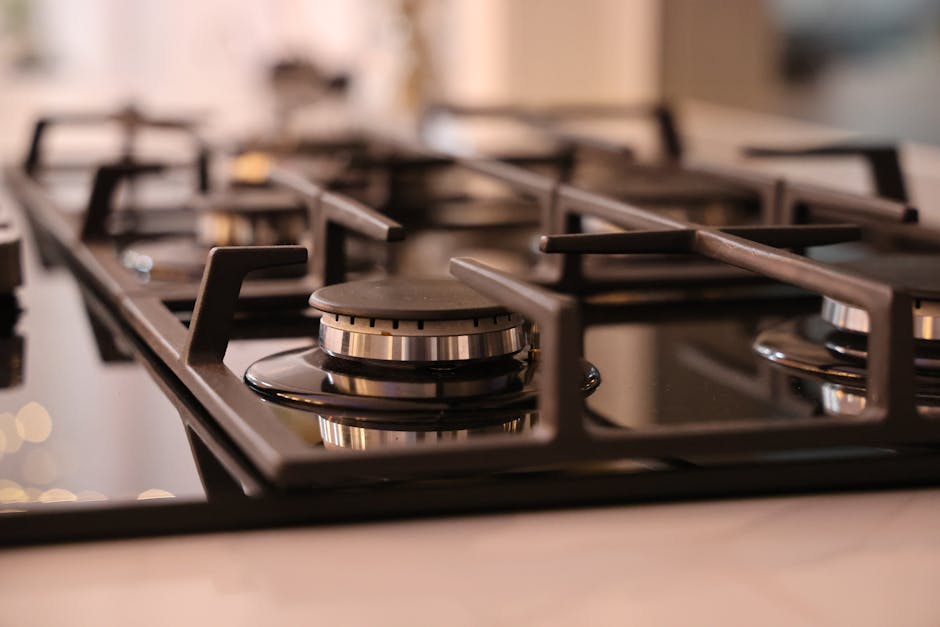
A stove burner won’t light — you hear the clicker tick-tick-ticking but no flame appears, or only some burners ignite and others stay silent, or the flame catches and then sputters out the moment you let go of the knob — is one of those kitchen problems that feels much scarier than it actually is. The good news: every gas range you can buy at a U.S. retailer has been engineered for exactly this failure mode, and the parts you’ll touch carry no gas pressure when the knob is off. Before you book a $140 appliance service call, give yourself 20 minutes. A stove burner won’t light is almost always one of five things: a wet or food-clogged burner cap, a spark igniter coated in grease, a stuck thermocouple on older pilot-light models, a tripped or unplugged spark module, or a partially clogged orifice from years of cooking spatter. Walk through the six checks below before spending a dollar.
Why a stove burner won’t light is rarely a “buy a new range” problem
Appliance techs see this complaint constantly, and the failure breakdown is remarkably consistent. Roughly 40% of every “stove burner won’t light” service call is food debris, boilover crust, or water in the burner cap and head — the spark gap is shorted to ground through wet residue and no flame can establish. Another 20% is a spark igniter (the small ceramic-tipped electrode beside each burner) coated in cooking grease that insulates the spark. About 15% is one bad igniter or one bad switch in a shared spark circuit — on most ranges all four front igniters spark together every time you turn any knob, so one shorted electrode can stop every burner from lighting. About 10% is the spark module behind the control panel, which is a single $40 part that powers every igniter on the cooktop. About 7% is the burner orifice partially clogged with food bits or insect debris reducing gas flow below the lightoff threshold. And only the final 3% is the gas valve or supply line itself. The math is friendly: 97% of these calls are something a careful homeowner can resolve in 20 minutes.
Tools you actually need
- A toothpick or a straightened paper clip
- An old toothbrush and dish soap
- White vinegar and a microfiber towel
- A Phillips screwdriver and a quarter-inch nut driver
- A flashlight
- A spare spark igniter ($15) for your range’s model number if you decide to swap one
Safety note: Always shut every burner knob to OFF and confirm OFF by smell before working on the cooktop. Gas in U.S. residential service has odorant added precisely so you can detect a leak with your nose — if you smell sulfur or rotten eggs anywhere near the range, stop, open windows, do not flip any switches, and step away to call your gas utility. Otherwise the work below carries no gas exposure. The same general appliance-safety logic from our oven not heating walk-through applies here word-for-word.
Step 1: Clean the burner cap and the head underneath
This is the single highest-payoff move for a stove burner won’t light diagnosis and ends roughly 40% of cases by itself. Lift off the burner cap (the heavy black disc) and the burner head (the ring with the gas ports drilled through it) for each problem burner. Soak both in warm soapy water for 10 minutes, then scrub with the toothbrush, paying special attention to the small slits or holes around the rim of the head. Hold the head up to a light — you should be able to see daylight through every port. Any port blocked by hardened grease, salt crust, or boilover residue means the gas/air mix at that port is wrong and the flame won’t establish. Run a toothpick or straightened paper clip through every port that looks dim. Dry completely with the microfiber towel and reseat. A wet burner head is the #1 cause people miss.
Step 2: Clean the spark igniter electrode
With the cap and head off, you can see the spark igniter — a small ceramic post with a metal tip that pokes up beside the burner. Years of cooking spatter coat that ceramic with conductive grease, the spark shorts to the metal stove top through the film, and the gap that should jump to the burner head never sparks at all. Dampen a cotton swab with white vinegar (never water alone) and gently scrub the ceramic post all the way down to where it enters the cooktop. Wipe with a dry cloth. Look carefully: a healthy igniter has a clean white ceramic body and a small bright metal tip; a worn igniter has chipped ceramic or a tip that’s been eroded to a stub. The latter needs replacement.
Step 3: Listen to the clicker and test the spark module
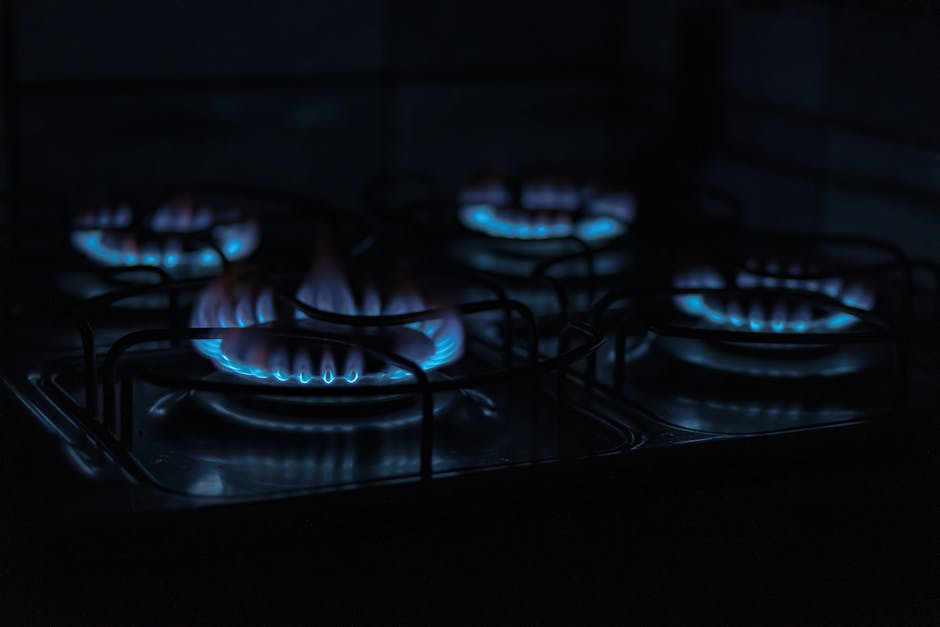
Turn one burner knob to the “Lite” position in a dim kitchen with the cap and head removed so you can see the igniter directly. You should hear rapid clicking and see a bright orange-blue arc jumping from the ceramic post to the metal nearby. If no clicking at all, the spark module is unplugged or dead — pull the cooktop or open the back panel and check the connector. If clicking happens at all burners but no arc at this one, the wire from the spark module to this igniter is broken (a $10 wire harness piece). If clicking is weak or intermittent across all burners, the spark module itself is dying and is a $40 replacement that takes 30 minutes. The same “is the control board sending the signal?” mindset from our microwave walk-through applies here in the same chain of isolation.
Step 4: Test each burner switch by swapping
On most U.S. gas ranges, each burner has a small mechanical switch behind the knob that closes when you push and turn the knob to “Lite,” telling the spark module to fire. If one switch shorts, the module thinks that burner is always calling for spark and fires constantly — you’ll hear the clicker tick when the knob is in OFF. If one switch opens, that burner never tells the module to spark. The diagnostic trick: pull two knobs, swap the two switches, retest. If the problem follows the switch, replace the switch ($12). If the problem stays at the original burner, the fault is in the igniter or the wiring. Mark which switch went where with a piece of tape before you start.
Step 5: Clear the burner orifice with a paper clip
If you have spark, you have clean caps and heads, and the burner still won’t ignite, the gas isn’t getting through. The orifice is the brass jet at the center of each burner that meters gas into the air mix. A clogged orifice gives a tiny weak flame at best, none at worst. With the burner head removed, look down into the burner cup — you’ll see a small brass fitting with a pinhole in the center. Straighten a paper clip and gently insert into the pinhole, rotating once or twice. Do not enlarge the hole — you only want to clear debris, not change the diameter. Reassemble and try again. The NFPA’s cooking safety guidance covers the broader gas-range safety logic for context. And our smoke detector walk-through is the right partner read if your kitchen alarm ever protests during cooking.
Step 6: When to actually call a tech
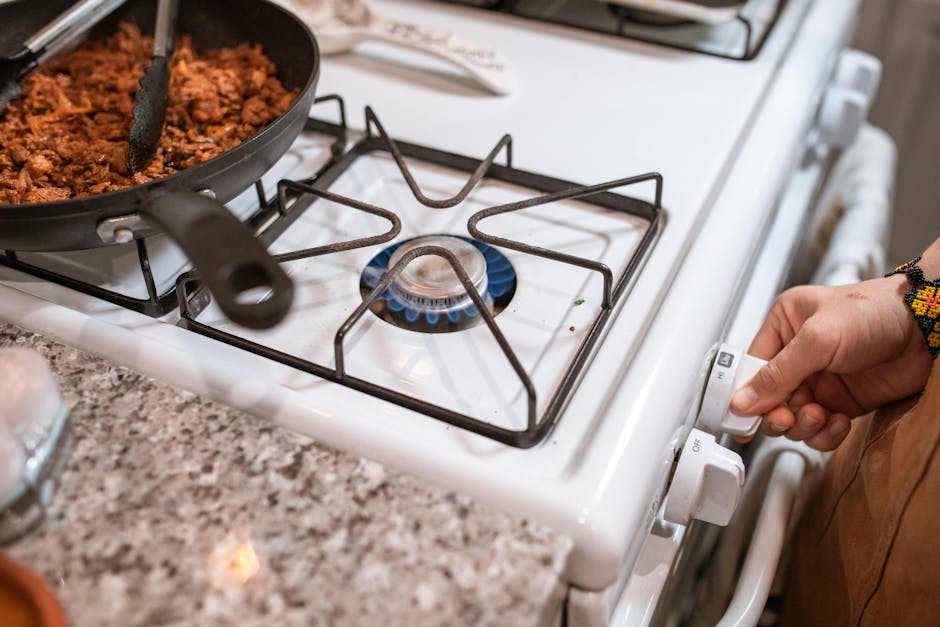
Call a pro only if: every burner stays cold despite clean parts, working spark, and clear orifices — that combination means the gas valve at the back of the range or the regulator on the supply line is faulty, and that’s a job for someone with a manometer and a leak detector. Also call immediately if you smell gas at any point during diagnosis, if a burner lights and then “lifts off” (flame floats away from the burner head, indicating the regulator is set wrong for your fuel type), or if a flame burns yellow instead of blue (incomplete combustion, a carbon monoxide risk). Energy Star’s cooking products guidance covers the broader replacement math if you’re at the 15+ year mark on the range itself.
One last habit: clean the burner caps and heads in soapy water once a month, wipe the igniter ceramics with a vinegar-damp swab every two months, and never let a pot boil over without wiping the burner head dry afterward. Those three rules will keep nearly any gas range firing on the first click for the next decade and keep “stove burner won’t light” from becoming your problem in the first place. The cheapest repair is the one you prevent.
Aiden Brooks writes coverhub.fun’s home-appliance coverage, with a focus on the everyday breakdowns that prompt a $200–$300 service call when a no-cost fix would have worked just as well. His background in residential appliance service shows up in the structure of his guides: open with the failure pattern, walk through the cheapest checks first, and only get to parts replacement after every easy win has been ruled out.
Aiden focuses on dishwashers, garbage disposals, washing machines, dryers, and refrigerators — the workhorses that quietly drain household budgets when they go sideways. His recurring theme is that most ‘broken appliance’ verdicts are really a clogged filter, a kinked drain hose, a tripped thermal switch, or a piece of glass jammed in an impeller that sixty seconds with a flashlight can find. When a unit really is at end of life, he’ll tell you that too — and what to look for in a replacement.
Aiden also runs the appliance-safety editorial pass at coverhub.fun: every guide on his byline is reviewed against manufacturer safety guidance before going live. Reach him at editorial@coverhub.fun.