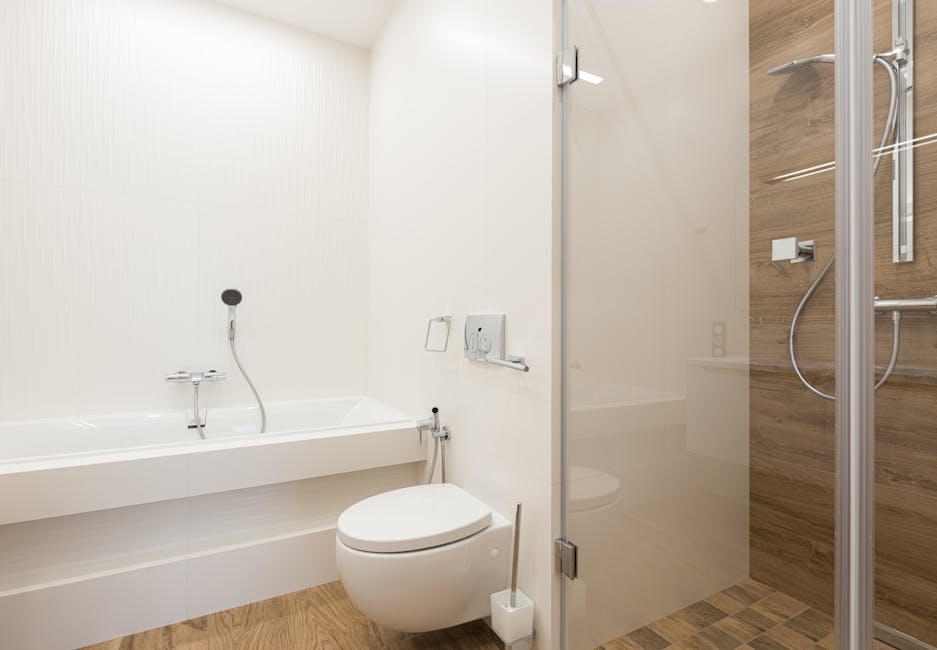
A toilet keeps clogging — once a week, twice a month, every time there’s company over — is not “bad luck” and it’s not always the toilet paper. A toilet that genuinely clogs once a year is normal. A toilet that keeps clogging on a predictable schedule is telling you something specific about the trapway, the bowl design, the vent stack, or the drain line behind the wall. Before you book a $250 plumber to snake the same line for the third time this year, give yourself 30 minutes. A toilet keeps clogging is almost always one of five things: a low-flow first-generation 1.6 GPF bowl with an undersized trapway, a partial obstruction lodged just below the toilet that lets normal flushes through but catches anything bulky, a slow-vent condition where the drain line can’t breathe and water moves at a crawl, tree roots intruding into the lateral somewhere between the house and the city main, or a sewer line that has bellied or back-pitched over years of soil movement. Walk through the six checks below before spending a dollar.
Why a toilet keeps clogging is rarely a “buy a new toilet” problem
Plumbers see this complaint constantly, and the failure breakdown is remarkably consistent. Roughly 30% of every “toilet keeps clogging” service call is a first-generation 1.6 GPF toilet (1994 to roughly 2003) whose undersized trapway and weak siphon never had enough flow to clear modern thicker toilet paper. Another 25% is a partial obstruction — a forgotten flushable wipe, a child’s toy, or a hardened mineral ring — lodged just past the trap. About 20% is a vent stack on the roof that has become partially blocked by leaves or a bird nest, so the drain can’t draw a proper siphon. About 15% is tree-root intrusion in the lateral — small feeder roots find a tiny crack in older clay or cast iron and grow into a partial mesh that catches solids. About 7% is a bellied or back-pitched drain pipe where soil shift has created a low spot solids settle into. And only the final 3% is a fundamental defect in the toilet that justifies replacement. The math is friendly: 97% of these calls are something a homeowner can diagnose and 70% can fully resolve themselves.
Tools you actually need
- A flange plunger (the kind with the inner sleeve, not the cheap cup-style)
- A closet auger ($15 to $25) with at least a 3-foot reach
- A small mirror and a flashlight for inspecting the trapway
- Rubber gloves and old towels
- A garden hose for the rooftop vent stack inspection (if you do Step 5)
- A ladder rated for your roof pitch
Before you start: Close the shutoff valve at the wall behind the toilet so an enthusiastic plunge doesn’t accidentally trigger a refill that overflows the bowl. The same control-the-water first move from our toilet won’t flush walk-through applies word-for-word here.
Step 1: Identify whether it’s the toilet, the line, or both
This is the single most important diagnostic step and most homeowners skip it. Walk through the house and ask: does only this one toilet keep clogging, or do other fixtures also act up? If the kitchen sink gurgles when you flush, or the shower drains slowly the same day a toilet backs up, the problem is no longer “the toilet” — it’s the shared drain line and you need to skip ahead to Steps 5 and 6. If only this single toilet keeps clogging while every other fixture in the house is fast, the problem is local to this fixture — the trapway, the bowl, or the closet bend just below the floor. About 1 in 3 homeowners discover at this step that they’ve been treating a fixture symptom while ignoring a whole-house cause.
Step 2: Auger the trapway thoroughly
A plunger moves water in and out of the bowl; a closet auger physically scrapes the inside of the trapway. If your toilet keeps clogging weekly, the trapway is almost certainly carrying a layer of mineral scale, calcified soap scum, or biofilm that has narrowed the effective passage by 30 to 40%. Feed the auger cable into the drain with the curved sheath protecting the porcelain, then crank slowly — you should feel the cable scrape side to side as it descends. Back the cable out gently, rinse it in a bucket, and repeat from a different starting position. Three passes will pull out things that a single pass misses entirely. The same scraping mindset we use for clogged drains in general applies in spades to a recurring toilet clog.

Step 3: Mirror-inspect the trap for foreign objects
Shut the water, sponge the bowl dry, and use a small mirror and a flashlight to look up into the trap from the front. You’re looking for: a flushable wipe wedged sideways (the most common cause of recurring clogs in homes with toddlers), a small plastic toy, a hairbrush, a phone case, or a calcified mineral ring that has narrowed the passage. Anything you can see, you can usually retrieve with the closet auger or, in stubborn cases, by removing the toilet entirely from the floor (4 bolts, 90 minutes, $5 in fresh wax ring) and flipping it upside down. Don’t go further than this without a clear view: a toilet that keeps clogging because of a permanent partial obstruction will never resolve until that object is physically removed.
Step 4: Check toilet paper, flushable wipes, and habits
While you have the tools out, do a paper test. Drop a single sheet of your current toilet paper into a glass of water and stir gently. After 30 seconds, healthy paper falls apart into a slurry; bad paper holds its shape like a wet handkerchief. Premium “ultra-soft” 3-ply often falls into the second category and is a leading cause of recurring clogs in modern low-flow bowls. Switch to a 2-ply RV-rated or septic-safe brand for two weeks and see if the clog cycle stops. Also: “flushable” wipes are not actually flushable in any drain line that isn’t perfectly sized and graded, regardless of the marketing. If anyone in the house is using them, that alone explains your recurring problem. The EPA’s WaterSense residential toilets guidance covers paper compatibility and modern bowl design in detail.
Step 5: Clear the vent stack on the roof
If a single toilet keeps clogging despite a clean trap and sane paper habits, climb up and look at your vent stack — the open pipe protruding through the roof above the bathroom. Birds nest in vent stacks, leaves pile up at the screen, and over years a partial blockage chokes the airflow that lets the drain line breathe. A blocked vent means every flush has to create suction against atmosphere instead of with it; the siphon weakens and solids that would normally clear catch in the trap. Run a garden hose into the vent stack at low flow for 60 seconds — water should disappear into the line freely. If it backs up at the rim of the stack, the vent is restricted. Use the closet auger from the rooftop or hire a plumber with a power auger for this one step.
Step 6: When to actually call a plumber
Call a pro only if: multiple fixtures back up together (main line problem — not your toilet), water backs up into a shower or tub when you flush (sewer-side clog or root intrusion that needs a snake or hydro-jet you don’t own), the toilet rocks on its base or leaks at the floor flange (wax ring failure that needs the toilet pulled and reseated), or a single-toilet recurring clog persists despite a clean trap, sane paper, and a clear vent stack — that combination means there’s a defect or root mass in the lateral that needs a sewer camera to locate. While you’re thinking about whole-system plumbing health, our running toilet walk-through is the natural companion if your shutoff valves or fill valves are also tired. This Old House’s toilet repair guide has the cleanest illustrated reference for the parts side of the fix.
One last habit: auger the trapway preventively once a year whether or not you have a clog, switch to single-ply or RV-rated paper if you have a low-flow toilet, and never flush wipes (no matter what the package says). Those three rules will keep nearly any toilet flushing cleanly for the next decade and keep “toilet keeps clogging” from becoming your problem in the first place. The cheapest repair is the one you prevent.

Marcus Reed is coverhub.fun’s lead contributor on home plumbing and water-system repair. Drawing on more than a decade of hands-on residential service work — supply lines, drains, fixtures, and the kind of emergency leaks that wake a family up at 2 a.m. — Marcus translates the diagnostic playbook that professionals run on every call into language a homeowner can follow at the kitchen sink. His guides walk through the safe, fast checks worth doing before you reach for the phone, plus the exact red flags that mean it really is time to bring in a licensed plumber.
He focuses on the high-cost emergencies that most often catch people unprepared: burst pipes, running toilets that quietly inflate water bills, kitchen drains that back up at the worst time, and shut-off valves no one can find when water is already on the floor. Every guide is written from a ‘try this first’ mindset, with clear safety stops along the way.
Marcus is also the editorial fact-checker for coverhub.fun’s plumbing category. If you have a fix that worked at your house and isn’t covered yet, or a correction on something that is, email editorial@coverhub.fun and he’ll take a look.