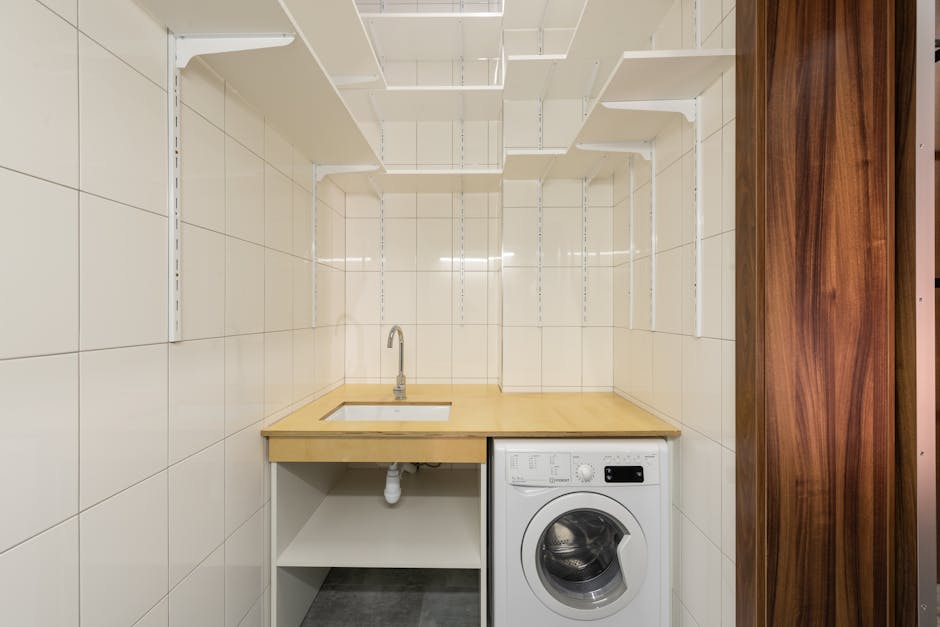
A washer leaking water — you walk into the laundry room mid-cycle and find a slow puddle creeping out from the front of the machine, water trickling down the back behind the drum, or a damp ring around the base after a load finishes — is the most common appliance complaint that drives homeowners to schedule a $200 service call and the one most likely to be a 30-minute fix you do yourself. The vast majority of a washer leaking water situation traces to one of six very specific failure points, every one of which you can inspect and almost always repair with a flashlight, a flathead screwdriver, and a pair of channel-lock pliers. Before you call the appliance repair tech, give yourself half an hour. A washer leaking water is almost always one of these: a torn or moldy door boot (front-loader rubber gasket), a loose or cracked water inlet hose at the back, a kinked or split drain hose dribbling behind the machine, a clogged detergent dispenser overflowing during fill, a worn pump seal at the front sump, or — only at the bottom of the list — a failed tub seal that genuinely needs a tech. Walk through the six checks below before you spend a dollar.
Why a washer leaking water is almost never “the machine is shot”
Working appliance techs see this complaint every week and the failure breakdown is remarkably consistent across every make and model on the U.S. market — Whirlpool, LG, Samsung, Maytag, GE, Bosch, Electrolux. Roughly 35% of every washer leaking water call on a front-loader is the door boot — the rubber gasket that seals the door against the drum has a small tear in the bottom fold or has a wad of detergent slime trapping moisture against the inside. Another 25% is the water inlet hoses at the back of the machine, where the rubber washers inside the hose ends have hardened and the screw connection at the wall valve has loosened, producing a slow drip behind the machine that ends up on the floor under the front. About 15% is the drain hose — either kinked behind the machine, split where it enters the standpipe, or sitting too deep in the standpipe and siphoning back. About 10% is the detergent dispenser drawer overflowing because either the drawer itself is caked with old detergent buildup or the user is using too much high-efficiency (HE) soap and the foam climbs over the dispenser walls. About 10% is the front pump and filter housing, where a worn rubber gasket on the cleanout filter cap drips after every drain cycle. The remaining 5% is a true tub seal failure that drips from the center of the motor area and needs a tech. The math is friendly: 95% of a washer leaking water complaint clears with hand tools and 30 minutes.
Tools you actually need
- A flashlight and a roll of paper towels
- A flat-blade screwdriver and a Phillips screwdriver
- A pair of channel-lock pliers
- A small bucket and a couple of old towels
- Rubber gloves — what comes out of the pump filter is going to be ugly
- A pair of new rubber washer hose gaskets ($1 for a pack of four) — only if step 2 confirms a hose seal failure
Before you start: unplug the machine or flip the breaker for the laundry circuit. Shut off both the hot and cold water valves at the wall (turn the handles a quarter turn so they cross the pipe). Pull the machine forward a foot from the wall so you have access to the back — on a front-loader, walk it forward by gently rocking corner to corner; do not tip it. Lay an old towel along the floor against each side of the machine so any new drip during the test cycle is immediately visible. If the machine is also not draining at all alongside the leak, the pump side overlaps with our washer not draining walk-through; if you’re seeing a similar drip pattern at the dishwasher or the kitchen sink line, the diagnostic crosses over with our dishwasher not draining guide.
Step 1: Inspect the front door boot
This is the highest-payoff move for any front-loader washer leaking water and the one almost no homeowner does. Open the door fully and pull the lower lip of the rubber boot toward you, exposing the fold underneath the door opening. Shine the flashlight into the fold and rotate the drum slowly by hand all the way around. You’re looking for two things: a hairline tear or pinhole in the rubber (almost always in the bottom three inches of the boot where coins, hairpins, and bra wires collect), and a slimy black-and-pink film of detergent residue and mildew clinging to the bottom of the fold. A tear means you need a replacement boot (a $40 to $80 part you can swap yourself in 90 minutes; YouTube has a model-specific video for every machine). A slime ring without a visible tear is also a leak source — the boot is holding water against the drum lip during a high-speed spin and weeping it past the seal. Clean the entire fold with a paste of baking soda and a stiff toothbrush, rinse, dry, and run an empty cycle on the hottest setting with two cups of plain white vinegar in the drum. About 35% of a washer leaking water clears at this single step. From now on, leave the door slightly cracked between loads so the boot dries fully.
Step 2: Check the inlet hoses at the back
With the water valves closed and the machine pulled out a foot from the wall, look behind the machine at the two hoses screwed onto the back of the washer (hot is red, cold is blue) and onto the wall valves above. Feel each hose along its length: a hose that feels stiff, brittle, or shows any surface cracks is past its 5-year service life and needs replacement. Unscrew each hose by hand or with channel-locks (just enough grip; do not crush the brass coupling) and inspect the rubber washer inside the hose end. A hardened, cracked, or deformed washer is the most common single cause of a washer leaking water on a top-loader and the second most common on a front-loader. Replace both rubber washers with fresh ones from the four-pack, hand-tighten the hoses back on, and snug them a quarter turn with the channel-locks (no more — over-tightening will split the new washer the first time it pressurizes). Re-open the water valves and watch the connections for 60 seconds. About 25% of a washer leaking water solves permanently at this step. While you’re back there, consider replacing both rubber hoses with stainless-braided versions ($20 a pair) — they don’t fail catastrophically the way rubber hoses do at year 8 or 9 and are the single best $20 you’ll ever spend on the laundry room.
Step 3: Inspect the drain hose
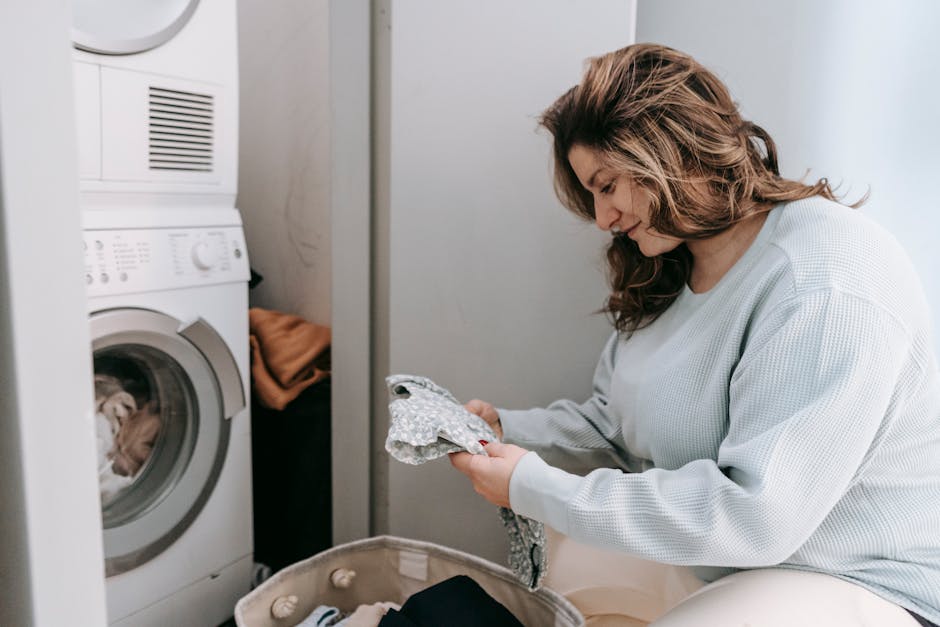
The single drain hose at the back of the machine runs from the bottom pump up to the standpipe in the wall (or into a laundry sink). Three things go wrong with it. First, kinks — if the hose is folded sharply against the wall when the machine sits at its normal position, the pump pushes water against the kink and water sprays past the connection at either end during the drain cycle. Reroute the hose with a gentle sweep, not a hard bend. Second, splits — especially at the corrugated section near the top, where repeated flexing during spin can crack the plastic. Run your fingers along the entire length and feel for any soft or wet spots. Replace the hose entirely ($15 part) if you find one. Third, depth in the standpipe — the drain hose should sit 6 to 8 inches into the standpipe, no more. If it’s jammed down 18 inches into a tight standpipe, the machine can siphon-drain mid-cycle and overflow the standpipe back onto the floor; if it’s sitting only 2 inches in, it can vibrate out and pour water on the floor at high spin. About 15% of a washer leaking water clears at this step.
Step 4: Clear the detergent dispenser
If the wet spot is at the front-top of a front-loader (water running down the front face from the dispenser drawer), the detergent dispenser is overflowing during fill. Two causes. First, you’re using too much detergent — modern HE washers need only one to two tablespoons of HE-rated soap per load, never the full cap line from a non-HE bottle. Excess foam climbs out of the dispenser walls and runs down the front. Second, the dispenser drawer and the chamber behind it are caked with old detergent crust. Pull the drawer completely out (most models have a release tab inside the empty cavity), soak it in hot water for 20 minutes, scrub with an old toothbrush, and run a stiff brush up into the chamber behind the drawer to clear the inlet jets and the siphon tube. Reinstall and run an empty hot cycle. About 10% of a washer leaking water solves at this step. From this point forward, switch to a single tablespoon of HE detergent per regular load and run a cleaning cycle once a month with a dishwasher tablet or vinegar — the same hygiene routine works as well on the appliance front as it does in the broader appliance maintenance covered in our dryer not heating walk-through.
Step 5: Clean the pump filter at the front
Front-loaders have a small access panel at the bottom-front corner of the machine that hides the drain pump filter — a screw-out plastic cap behind a small door. Open the access panel, set the bucket and a folded towel underneath, and unscrew the cap slowly. About a quart of dirty water will pour out (this is normal — the trap holds water between cycles to keep odors out). Inside the filter you will almost always find coins, hairpins, lint, sock fuzz, and the occasional underwire from a bra. Clean everything out, wipe the rubber gasket on the cap with a damp cloth, check it for any cracks or splits, and screw the cap back in firmly. A worn or pinched gasket on this filter cap is the cause of about 10% of a washer leaking water on the front-loader market, especially on machines five years and older. A new gasket is $4 from the manufacturer. Clean this filter every six months from now on and you’ll never have it back-up on you. Top-loaders don’t have this filter, but they do have a pump that should still be inspected for debris if the leak appears under the front of the machine.
Step 6: When to actually call an appliance tech
Call a repair tech only if: the door boot is dry and intact, both inlet hoses are tight with fresh washers, the drain hose is unkinked and properly seated, the detergent dispenser is clean, the pump filter gasket is fresh, and yet the washer leaking water persists. That combination points to a tub seal failure (water dripping from the center underside of the drum during spin, almost always around the motor area on a direct-drive front-loader) or a cracked outer tub. Both are dealer-level repairs — the tub seal is a $40 part but requires pulling the drum out, which is a 4-hour job for an experienced tech and an all-day project for a DIYer. If your machine is over 10 years old and a tub seal has gone, the repair cost is usually within $100 of a new entry-level machine and replacement is often the better economic call. The U.S. Department of Energy’s ENERGY STAR clothes washer guide at energystar.gov covers efficient replacement models and water-use ratings worth comparing. The EPA’s WaterSense program publishes companion data on water savings worth bookmarking before any replacement purchase.
One last habit: wipe the door boot dry after every load and leave the door cracked open between loads, replace both inlet rubber washers every five years, and run an empty cleaning cycle with two cups of plain white vinegar once a month. Those three rules together will keep a washer leaking water from being your problem for the next decade. The cheapest repair-tech visit is the one you never need to schedule.

Aiden Brooks writes coverhub.fun’s home-appliance coverage, with a focus on the everyday breakdowns that prompt a $200–$300 service call when a no-cost fix would have worked just as well. His background in residential appliance service shows up in the structure of his guides: open with the failure pattern, walk through the cheapest checks first, and only get to parts replacement after every easy win has been ruled out.
Aiden focuses on dishwashers, garbage disposals, washing machines, dryers, and refrigerators — the workhorses that quietly drain household budgets when they go sideways. His recurring theme is that most ‘broken appliance’ verdicts are really a clogged filter, a kinked drain hose, a tripped thermal switch, or a piece of glass jammed in an impeller that sixty seconds with a flashlight can find. When a unit really is at end of life, he’ll tell you that too — and what to look for in a replacement.
Aiden also runs the appliance-safety editorial pass at coverhub.fun: every guide on his byline is reviewed against manufacturer safety guidance before going live. Reach him at editorial@coverhub.fun.