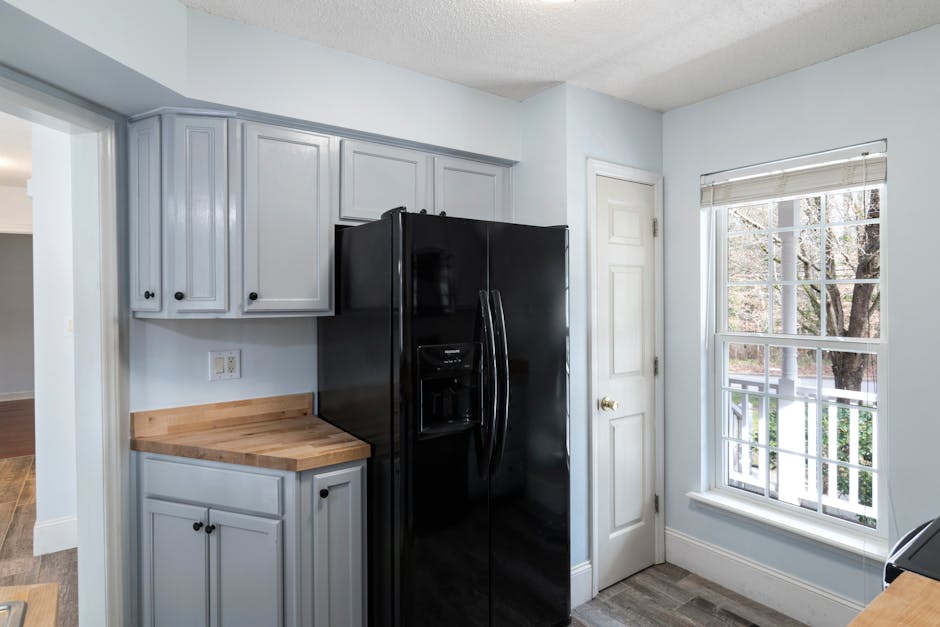
Is your refrigerator not cooling while it still hums, lights up, and pretends everything is fine — even as the milk turns and the freezer ice cream goes soft? Before you book a $250 to $400 appliance repair visit, give yourself 15 minutes. A fridge that runs but never gets cold is one of the most predictable failures in the kitchen, and the culprit is almost always a dust-clogged condenser coil, a blocked freezer vent, a worn door gasket, a misread temperature dial, or a frozen evaporator fan — all of which a homeowner can diagnose with a flashlight, a vacuum, and basic patience.
Why a refrigerator not cooling is almost never a dead compressor
Appliance techs see this call every single day, and they’ll tell you the breakdown looks like this: roughly 35% are dirty condenser coils choking heat transfer, 20% are blocked freezer-to-fresh-food airflow vents, 15% are bad door gaskets letting warm air in, 15% are frozen evaporator fans, 10% are wrong thermostat or dial settings, and only the last 5% are genuine compressor or sealed-system failures that need a pro. Walk the seven steps below in order and you’ll almost always finish in the cheap, fast, DIY zone — usually in well under 20 minutes.
Tools you actually need
- A flashlight or phone torch
- A coil-cleaning brush (or a vacuum with a crevice attachment)
- A standard refrigerator thermometer ($6 at any hardware store)
- A dollar bill (yes, really — for the door-gasket test in Step 4)
- A Phillips screwdriver and a quarter-inch nut driver
Step 1: Confirm the temperature with a real thermometer
This sounds obvious until you’ve watched a tech bill someone $150 to point at a dial. Drop a refrigerator thermometer in a glass of water, leave it on the middle shelf for 4 hours, then read it. The fresh-food compartment should sit between 35°F and 38°F, and the freezer should be at 0°F. The U.S. Food and Drug Administration’s food storage temperature guide uses the same numbers. If your refrigerator not cooling complaint turns out to be a dial accidentally bumped to “warmest,” congratulations — you’re done.
Step 2: Vacuum the condenser coils — the single biggest fix
This one step solves a third of all refrigerator not cooling calls by itself. Roll the fridge a few inches away from the wall (or pop the front kick-plate off on bottom-coil models) and you’ll find a black grille of coils caked in gray dust, pet hair, and whatever else has been living back there. The coils dump heat out of the sealed system — when they’re insulated by dust, the compressor runs nonstop but the inside never cools. Unplug the unit, brush the coils gently with a coil brush, then vacuum everything up. ENERGY STAR’s refrigerator efficiency guidance recommends doing this twice a year just for energy savings — we’d argue it’s mandatory the first time you suspect a refrigerator not cooling problem.
Step 3: Find the freezer vent and clear it
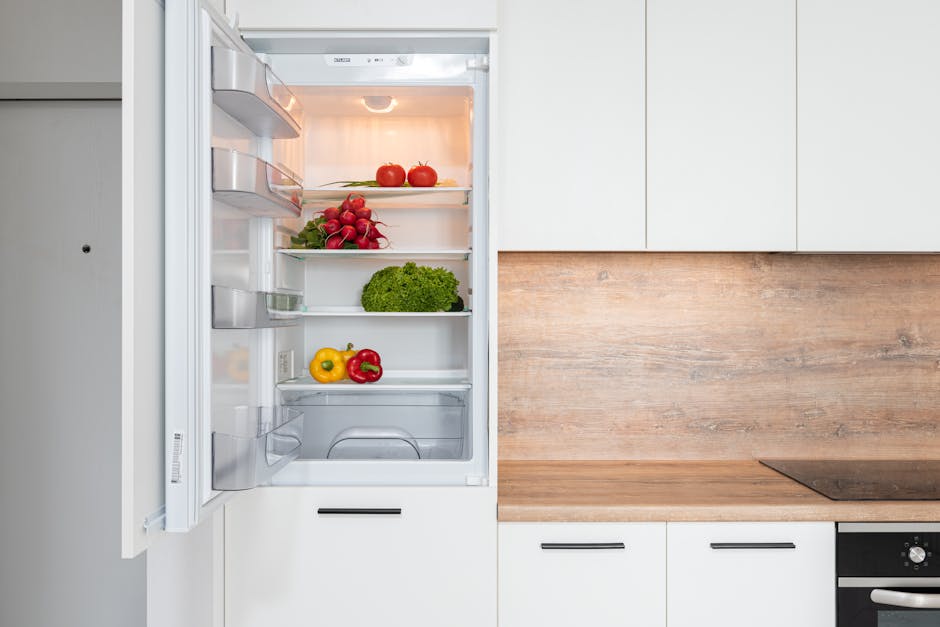
Modern fridges don’t have separate cooling for the fresh-food side — cold air is generated in the freezer and pushed through a small vent into the refrigerator compartment. Open the freezer and look on the back wall (or sometimes the top) for a series of louvers or slots. If a frozen pizza box or a too-tall ice-cream tub is jammed against those vents, the fresh-food side loses airflow first and you experience exactly what feels like a refrigerator not cooling failure even though the freezer is fine. Reorganize so nothing touches the back or top walls and leave at least an inch of clearance.
Step 4: Test the door gasket with a dollar bill
The rubber gasket around the door is the only thing keeping warm kitchen air out. After 7 to 10 years they harden, crack, or warp at the corners — and once warm air leaks in continuously, the compressor can’t keep up and you’ll swear the refrigerator not cooling problem is mechanical. Close the door on a dollar bill so half is in, half is out. Tug it. A healthy seal grips the bill firmly. If it slides out with no resistance, walk all four sides of the door and find the leak point. Replacement gaskets run $40–$80 and snap or screw in with a single screwdriver — far cheaper than the service call.
Step 5: Listen for the evaporator fan
Open the freezer and listen carefully for a steady fan whir behind the back wall. No fan sound means the evaporator fan has either iced over or burned out — and with no fan to circulate the cold air, you get the classic warm-fridge / sort-of-cold-freezer pattern. Unplug the unit for 24 hours to let any ice melt, then plug it back in. If the fan comes back to life, you’ve got a defrost-system problem worth monitoring; if it stays silent, the fan motor (about $40 and four screws) needs replacement. Manufacturers like Whirlpool’s appliance support center publish exact model-specific tear-down guides for free.

Step 6: Check airflow inside — you may have over-packed it
A fridge stuffed wall-to-wall after a big grocery run can fail to cool simply because the cold air can’t circulate. Conversely, a near-empty fridge has nothing to hold the cold and the compressor cycles inefficiently. Aim for roughly 75% full with clear gaps between items, especially near the rear vents. If your refrigerator not cooling complaint started right after a Costco run, this is your culprit — redistribute, leave it shut for two hours, and re-check the thermometer.
Step 7: Reset the unit and confirm the outlet
Unplug the refrigerator for five full minutes — this resets the control board the same way a router reboot resets your internet. While it’s unplugged, test the outlet with a lamp; a half-dead outlet on a shared circuit can deliver enough current to run the light but not enough to drive the compressor at full power. If the outlet itself is dead, walk through our quick guide on what to do when an outlet stops working before you blame the appliance. A flickering breaker is a different beast — for that, see our companion piece on a circuit breaker that keeps tripping.
When to actually call an appliance repair tech
Bring in a pro if: you hear no compressor hum at all after a full reset, the coils get hot but the inside never drops below 50°F, you see oily residue on or under the unit (a refrigerant leak), or the refrigerator not cooling problem survives all seven steps above. Those are the rare cases — for everything else, you’ve just saved a $400 service visit and a fridge full of spoiled food.
How to prevent the next refrigerator not cooling call
- Vacuum the condenser coils every six months — mark it on the calendar.
- Keep at least two inches of breathing room behind the fridge and an inch on the sides.
- Wipe the door gasket clean every month and watch for hardening at the corners.
- Don’t let the freezer ice-build past half an inch on the back wall — that’s a defrost-cycle warning.
- Avoid packing items right up against the rear airflow vents.
Related quick-fix guides
If your kitchen is having a bad week, our companion guides on dishwasher not draining and garbage disposal not working use the exact same diagnostic playbook. If the warmth issue is on the laundry side instead, our guide on a dryer not heating follows the same step-by-step style — same toolkit, completely different room.
Final word
Nine times out of ten, a refrigerator not cooling problem is a $0 coil vacuum, a $6 thermometer-calibration check, or a $40 door-gasket swap — not a $400 service call. Walk these seven steps in order, keep the coils clean, and the next time the milk threatens to turn you’ll handle it yourself in under twenty minutes.

Aiden Brooks writes coverhub.fun’s home-appliance coverage, with a focus on the everyday breakdowns that prompt a $200–$300 service call when a no-cost fix would have worked just as well. His background in residential appliance service shows up in the structure of his guides: open with the failure pattern, walk through the cheapest checks first, and only get to parts replacement after every easy win has been ruled out.
Aiden focuses on dishwashers, garbage disposals, washing machines, dryers, and refrigerators — the workhorses that quietly drain household budgets when they go sideways. His recurring theme is that most ‘broken appliance’ verdicts are really a clogged filter, a kinked drain hose, a tripped thermal switch, or a piece of glass jammed in an impeller that sixty seconds with a flashlight can find. When a unit really is at end of life, he’ll tell you that too — and what to look for in a replacement.
Aiden also runs the appliance-safety editorial pass at coverhub.fun: every guide on his byline is reviewed against manufacturer safety guidance before going live. Reach him at editorial@coverhub.fun.