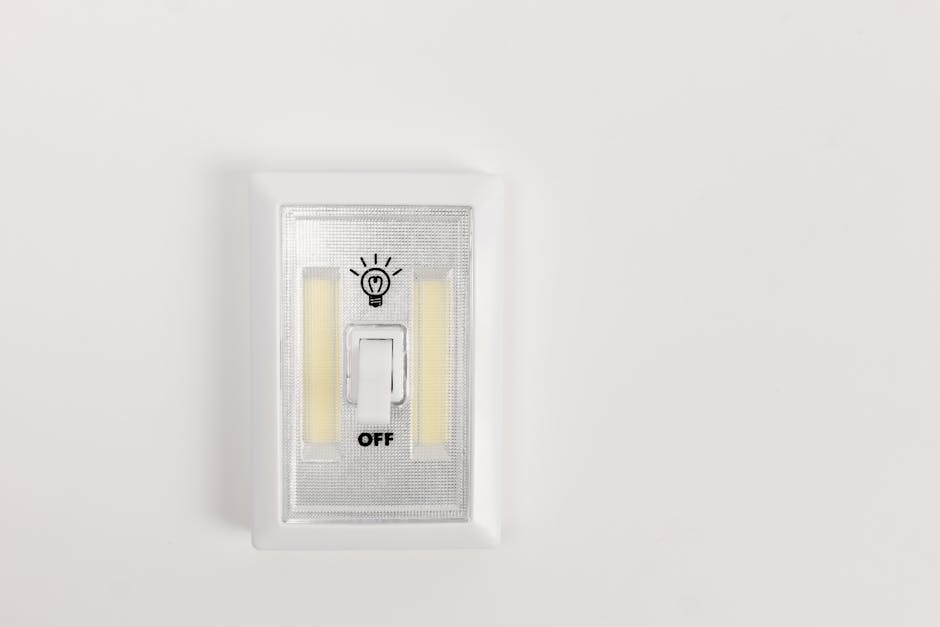
A light switch not working — the click is silent, or the click happens but the light stays dark, or the switch feels mushy and intermittent — is one of the most common electrical complaints and one of the most overdiagnosed. People assume the wiring inside the wall is the problem; in reality the switch itself is a $3 part that gets clicked roughly 50,000 times over its life and finally wears out exactly the way you’d expect a $3 part to. Before you book a $185 electrician’s minimum service call, give yourself 15 minutes. A light switch not working is almost always one of five things: a burned-out bulb downstream of a perfectly healthy switch, a worn snap mechanism inside the switch body, a loose wire under a backstab terminal, a tripped circuit breaker upstream, or a three-way switch pair where one of the two has failed. Walk through the six checks below before spending a dollar.
Why a light switch not working is rarely a “rewire the room” problem
Electricians see this complaint constantly, and the failure breakdown is remarkably consistent. Roughly 30% of every “light switch not working” service call is actually a dead bulb at the fixture — the switch is healthy and the wiring is healthy, but the only filament downstream burned out and nobody checked. Another 30% is a worn snap mechanism inside the switch body: the toggle moves but no longer makes a positive internal contact, so you get intermittent or dead operation. About 20% is a loose wire under a backstab terminal where someone pushed bare copper into a spring-clip hole instead of curling it under a screw — those connections loosen over years of thermal cycling and arcing wears the spring. About 10% is a tripped breaker or GFCI further up the line that nobody walked back to confirm. About 7% is a three-way switch pair where one of the two has failed (you’ll notice the light works from one location but not the other). And only the final 3% is an in-wall wiring fault. The math is friendly: 97% of these calls are something a careful homeowner can resolve in under 15 minutes.
Tools you actually need
- A non-contact voltage tester ($12)
- A Phillips screwdriver and a flat-head
- A pair of needle-nose pliers
- A spare single-pole (or three-way, if applicable) switch ($3 to $6)
- A flashlight or headlamp for the box interior
- A small piece of electrical tape
Safety note: Always kill the breaker before opening a switch box and confirm dead with the voltage tester at both screw terminals. The label on your breaker panel is wrong about 30% of the time — verify with a tester, not with optimism. The same caution we use for our dead outlet walk-through applies word-for-word here.
Step 1: Replace the bulb and confirm the breaker is on
This is the lowest-effort move and ends 30% of cases. Pull the bulb out of the fixture, put a known-good bulb in (preferably from a lamp you just confirmed works), flip the switch, and observe. If the new bulb lights, the entire system is healthy and you saved $185. If it doesn’t, walk to the electrical panel and look at the relevant breaker. A tripped breaker sits halfway between on and off; flip it fully off, then back to on. Also check any GFCI receptacles upstream — in many homes a bathroom or kitchen GFCI also feeds the adjacent lighting circuit and a trip there will look exactly like a switch failure. About half of all light switch not working complaints end at one of these two simple checks.
Step 2: Pull the switch and inspect the wiring
Kill the breaker. Unscrew the cover plate, then the two long screws holding the switch to the box. Pull the switch forward as far as the wires allow — usually 4 to 6 inches. Use the voltage tester at both screw terminals (and at any wire nut you can see) to confirm the box is dead. Now examine the connections. Look at: the two brass screws on the side of the switch (where wires curl under), any backstab holes in the back of the device with bare copper pushed in, and the bare copper or green ground wire attached to the green screw. A good connection has a clean copper curl under a tight screw with no exposed strands. A bad connection has discolored copper, a wire that wiggles when you push it, or a backstab where the wire pulls out with little resistance.
Step 3: Re-terminate any backstab wires to the side screws
If you see backstab holes in use, that alone is enough reason to redo the connections. Backstab terminals are technically code-legal on 15-amp circuits but they are the single most common cause of intermittent lighting in U.S. homes. Strip a fresh half-inch of insulation off each wire, form a curl with the needle-nose pliers that wraps clockwise around the screw, tighten firmly. Repeat for both hot wires (hot-in and hot-out, plus any travelers on a three-way). Then test the switch mechanically — flip it 10 times and listen for a crisp snap each time. A switch with a mushy or silent action is worn internally; replace with a fresh $3 device. Reinstall, restore power, and try the bulb. About 80% of complaints that survive Step 1 fall to this step alone.
Step 4: Diagnose a three-way pair properly
If the light is controlled from two locations (top and bottom of a staircase, two ends of a hallway), you have a three-way pair and they fail in a specific pattern: the light works from one switch but not the other, or it works only when both switches are in certain positions. Both switches are still wearing 50,000 cycles each and either one can fail. Pull both, identify the dark-colored “common” screw on each, and confirm the single hot wire is on common at one end and the load wire is on common at the other end. The two remaining brass screws on each switch take traveler wires (usually red and white, or red and black). If both switches were correctly wired and one suddenly stopped, the failed switch is the one whose mechanism feels mushy — replace it. The same upstream-vs-downstream isolation logic applies to our GFCI walk-through.
Step 5: Inspect the fixture and its socket
If the switch and breaker check out but a light switch not working symptom remains, the fault has moved downstream to the fixture itself. Kill the breaker, remove the fixture’s mounting screws, lower the assembly, and look at the socket and wire nuts. A common failure: the brass tab inside an Edison-base socket has been crushed flat against the bottom of the socket by years of overtightened bulbs, so it no longer makes contact. Use needle-nose pliers (after confirming dead) to gently pry the tab back up to about a 20-degree angle. Also tighten any wire nuts inside the fixture canopy — loose nuts are a top cause of intermittent failures. The NFPA’s home electrical safety guidance walks through fixture and socket inspection in detail. While you’re up there, the same “is anything overheated?” check applies to our ceiling fan walk-through.
Step 6: When to actually call an electrician
Call a pro only if: you’ve replaced the bulb, confirmed the breaker, re-terminated every wire to side screws, swapped the switch, inspected the fixture socket, and the light still doesn’t work — that combination means the in-wall cable is damaged (often stapled through during a remodel) and you’ll need a tone tracer or insulation tester to find it. Also call if you find any browning, charring, or melted insulation inside the switch box — that’s a fire warning, not a service complaint. Cut power immediately and bring in a licensed pro the same day. OSHA’s electrical-safety standards are the cleanest reference if you want to understand which conditions cross from “DIY” to “stop and call.”
One last habit: when you replace a switch, always use side-screw connections, not backstabs; pull every switch every five years and snug the screws (thermal cycling loosens them); and replace any switch that has started feeling mushy whether or not it’s failed yet — the part is $3 and you’re avoiding tomorrow’s nuisance call. Those three rules will keep nearly any switch reliable for the next 20 years and keep “light switch not working” from becoming your problem in the first place. The cheapest repair is the one you prevent.

Elena Park covers home electrical and HVAC topics for coverhub.fun. Her background in residential electrical service work — outlets, breakers, GFCIs, central air conditioning, and the steady stream of small failures that send most homeowners straight to a service tech — shapes the way her guides are written: figure out what’s actually wrong first, then decide whether you’re looking at a $0 reset or a real repair.
Elena focuses on the service calls that most often turn out to be DIY-safe: a single dead outlet that’s really a tripped GFCI two rooms over, a thermostat that’s reading wrong, a clogged AC condensate line, or a frozen evaporator coil masquerading as a dying compressor. She’s just as clear-eyed about the work that does not belong in a homeowner’s hands — anything inside the main electrical panel, any sustained burning smell, any breaker that won’t stay reset.
Each piece on her byline gets a final safety pass before publishing. Suggestions, corrections, and reader questions are welcome at editorial@coverhub.fun.